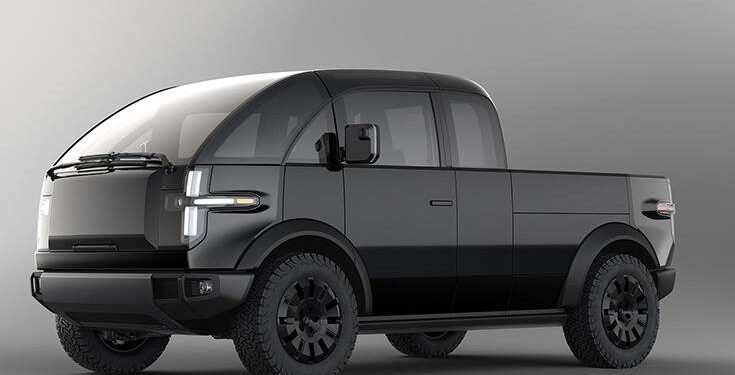
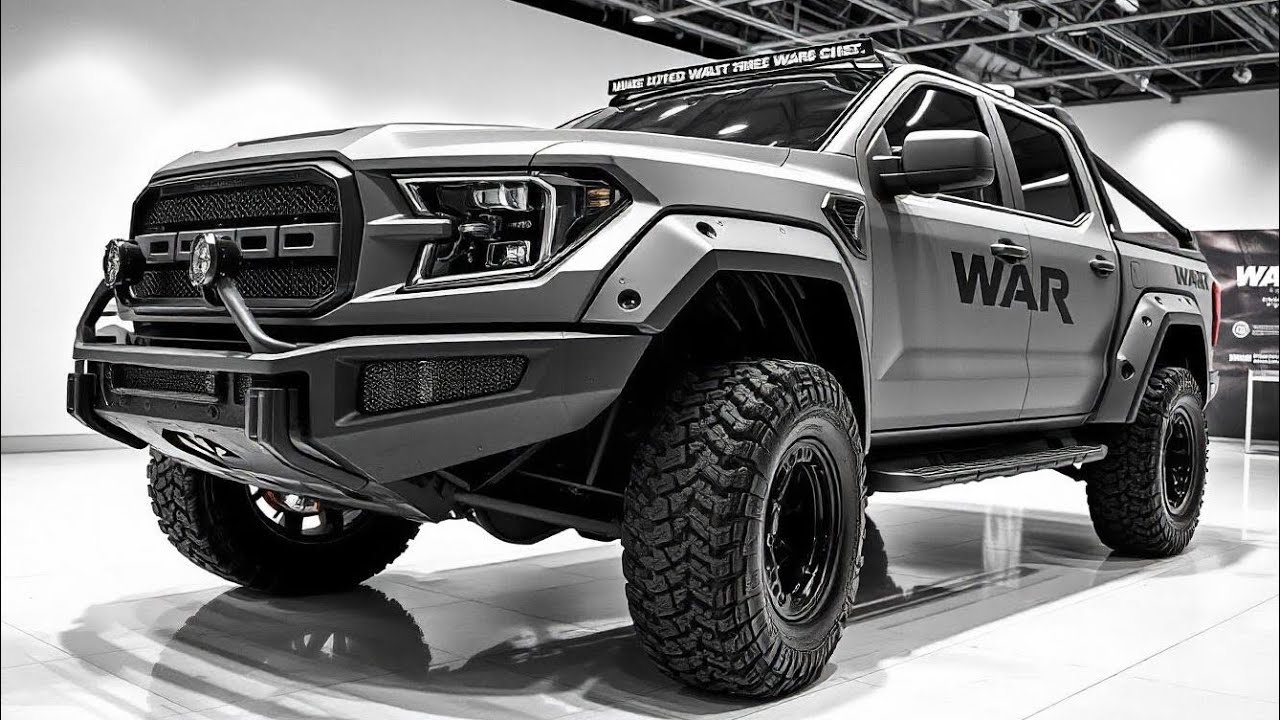
The automotive landscape is undergoing a seismic shift, and nowhere is the competition more fierce than in the burgeoning electric truck segment. As we approach 2026, what began as a race for innovation is rapidly escalating into a full-scale Electric Truck Range War. This conflict is not merely about who can build the most powerful truck, but about who can dominate the most critical metric for consumers: maximum driving range on a single charge. For potential buyers, range is the paramount concern, directly linked to utility, freedom from range anxiety, and overall viability as a replacement for internal combustion engine (ICE) trucks. This comprehensive analysis delves into the key contenders, the technological battlegrounds, the significant hurdles still to overcome, and a strategic guide for navigating this transformative market in 2026 and beyond.
The Battlefield: Understanding the Range Imperative
For decades, truck buyers prioritized horsepower, torque, and towing capacity. While these remain essential, the paradigm has shifted. In an electric vehicle (EV), range is the foundational currency. It dictates how far you can commute, adventure, and most importantly, work without the need to recharge. The 2026 Electric Truck Range War is fundamentally about convincing commercial and recreational users that an electric truck can match and eventually surpass the 500-700 mile refueling range of a diesel pickup. This war is fought on three interconnected fronts: battery cell chemistry and energy density, vehicle efficiency and aerodynamics, and charging infrastructure speed and availability. The manufacturers that master this trifecta will claim victory in the marketplace.
The Contenders: A 2026 Lineup Analysis
The following section breaks down the projected key players in the 2026 range war, examining their technological approaches, announced or projected specifications, and strategic advantages.
A. Tesla Cybertruck (and Projected Variants)
Tesla ignited the electric truck conversation and remains a formidable contender. By 2026, the Cybertruck lineup is expected to be fully matured, with potential updates to its initial tri-motor “Cyberbeast” configuration.
-
Range Strategy: Tesla leverages its industry-leading 4680 battery cell technology, designed for higher energy density and lower cost. Its focus on extreme vehicle efficiency through its controversial but aerodynamic stainless steel exoskeleton and minimalist interior maximizes miles per kilowatt-hour (kWh).
-
2026 Projection: While the initial top-tier model promises an EPA-estimated 470 miles, industry analysts anticipate that by 2026, Tesla could release a “range-optimized” dual-motor variant or a new cell chemistry pushing a flagship model to the psychological benchmark of 500+ miles.
-
Key Advantage: The seamless integration with Tesla’s vast and reliable Supercharger network, which is slated to open to other brands, remains a colossal benefit, mitigating range anxiety more effectively than any spec sheet number.
B. Ford F-150 Lightning and Next-Gen Platforms
Ford’s F-150 Lightning proved that demand for electric workhorses is real. By 2026, we can expect a significant refresh or a next-generation model built on a dedicated EV platform.
-
Range Strategy: Ford’s current approach uses high-capacity NCM (Nickel Cobalt Manganese) battery packs. The future lies in their partnership with SK Innovation and the shift to lithium iron phosphate (LFP) chemistry for standard range models (offering longevity and cost benefits) and advanced NCM for extended range. Aerodynamic improvements over the ICE F-150 are key.
-
2026 Projection: The current Extended Range battery offers around 320 miles. A next-gen platform with improved cell density and vehicle efficiency could realistically target 400-450 miles for the premium variant. Ford’s deep understanding of truck user needs will drive optimization for real-world towing range.
-
Key Advantage: The Ford Pro ecosystem for commercial fleets, including charging solutions and telematics, creates a sticky, business-centric ecosystem beyond the vehicle itself.
C. Rivian R1T / R1S and R2 Platform
Rivian established the premium electric adventure vehicle segment. By 2026, their simpler, smaller R2 platform will be in production, but the R1 will likely see incremental improvements.
-
Range Strategy: Rivian’s “Large Pack” and “Max Pack” battery options showcase a modular approach. Their engineering focus on off-road capability and luxury necessarily impacts aerodynamics, so gains will come from next-generation battery cells supplied by partners and in-house motor efficiency improvements.
-
2026 Projection: The current Max Pack already approaches 400 miles. Advances in silicon-anode or solid-state precursor technology from a supplier could push a future R1T Max Pack to 420-440 miles. The R2 vehicle, being smaller, may achieve impressive range figures with a smaller, cheaper battery.
-
Key Advantage: Brand strength in the lifestyle/overlanding segment and a robust, growing proprietary charging network (Rivian Adventure Network) focused on destination routes.
D. Chevrolet Silverado EV & GMC Sierra EV
GM’s Ultium platform is the backbone of their electric offensive. The Silverado EV RST and its GMC Sierra EV Denali sibling represent a direct technological challenge.
-
Range Strategy: The modular Ultium battery system allows for flexible pack sizes. GM has touted advanced nickel-cobalt-manganese-aluminum (NCMA) chemistry, which reduces cobalt content. Their vehicle design incorporates aerodynamic tricks like a covered rear tonneau to aid efficiency.
-
2026 Projection: GM has boldly announced an estimated 450-mile range for the Silverado EV RST set to launch before 2026. By the 2026 model year, this figure could be solidified and potentially exceeded in a top trim, establishing a very high bar.
-
Key Advantage: The Ultium platform’s scalability across price points and vehicle types promises economies of scale and proven performance in vehicles like the GMC Hummer EV.
E. Ram 1500 REV and the STLA Frame Platform
Ram entered the fray with a clear strategy: focus on the needs of the hardest-working truck buyers. The 1500 REV, based on Stellantis’s dedicated STLA Frame architecture, is a late but potentially powerful entrant.
-
Range Strategy: Ram is taking a dual-path: a pure battery-electric vehicle (BEV) with a large ~229 kWh pack and a range-extended electric vehicle (REEV) featuring a smaller battery and an onboard gasoline generator. This directly addresses towing range anxiety.
-
2026 Projection: Ram has promised an industry-leading 500-mile EPA-estimated range for its top BEV variant at launch, aiming to claim the range crown immediately. The 2026 models will be the first true test of this promise in consumer hands.
-
Key Advantage: The optional range-extender is a unique and pragmatic solution for fleet buyers who cannot afford downtime, effectively eliminating range anxiety for specific use cases.
The Technological Trenches: Where the War is Really Won
The advertised range numbers are the result of intense behind-the-scenes battles in materials science and software.
A. Battery Chemistry Innovations: The shift from traditional NCM to LFP for base models offers durability and lower cost. The real 2026 battleground is in advanced NCM (like GM’s NCMA) and the early deployment of silicon-anode technology. Silicon anodes can hold significantly more lithium ions than traditional graphite, promising 20-40% increases in energy density. Companies like Sila Nanotechnologies are working with automakers to bring this to market by mid-decade.
B. Vehicle Efficiency Engineering: It’s not just about a bigger battery. Reducing weight through gigacasting (as used by Tesla) and material science is critical. Aerodynamics, historically a weakness for trucks, is now a primary focus. Active air shutters, sleek underbody panels, and innovative bed designs (like the Chevrolet’s Midgate) all work to lower the drag coefficient (Cd) and preserve range, especially at highway speeds.
C. The Charging Factor: Speed as a Range Multiplier
Range is not just about distance between charges, but about time spent charging. The 2026 Electric Truck Range War is inseparable from the charging infrastructure war. 800-volt architecture, now spreading from luxury cars to trucks, allows for dramatically faster DC fast charging. A truck that can add 200 miles of range in 15 minutes effectively reduces the perceived penalty of a lower total range. The expansion of reliable, high-power charging networks along freight corridors and in rural areas is a prerequisite for the mass adoption of electric trucks.
The Elephant in the Room: Towing and Payload’s Brutal Impact
Any discussion of electric truck range is incomplete without a stark warning: towing drastically reduces range. It’s not uncommon for an electric truck’s range to be halved when towing a heavy trailer. This is the single greatest challenge for the segment.
-
The Physics: Overcoming aerodynamic drag from a large, boxy trailer requires immense energy. While ICE trucks also lose efficiency when towing, the effect is more acutely felt in an EV due to the finite energy in the battery and the current lack of ubiquitous high-speed towing lane chargers.
-
Manufacturer Responses: Brands are tackling this through:
-
Massive Battery Buffers: A 200+ kWh battery in trucks like the Ram REV or Silverado EV provides a larger “usable” pool even after a 50% reduction.
-
Towing-Specific Drive Modes: Software that optimizes powertrain and suspension for towing efficiency.
-
Range-Extender Solutions: As seen with Ram, a gasoline generator acts as a safety net for long-haul towing.
-
-
The 2026 Reality: Buyers must critically evaluate usable range while working. A 500-mile rated truck may offer only 250 miles when towing a 10,000-pound load. Charging planning becomes an essential skill.
A Strategic Buyer’s Guide for the 2026 Range War
Navigating this market requires a clear-eyed assessment of personal needs versus marketing claims.
A. Decode the Range Spec: Look beyond the headline EPA number. Research real-world highway range tests from independent reviewers. Understand the difference between city and highway ratings; trucks, especially when towing, spend most of their time on highways where efficiency is lower.
B. Calculate Your True Needs: Most daily driving requires less than 100 miles. The need for 400+ miles is typically for road trips or towing. Create a cost-benefit analysis: is paying a $20,000 premium for an extra 150 miles of range logical for your 3 annual road trips, or would that money be better spent on excellent home charging and occasional rental solutions?
C. Prioritize Charging Ecosystem Access: A 350-mile truck with seamless access to a reliable, high-speed network is often more usable than a 400-mile truck reliant on patchy third-party chargers. Investigate the network partners (e.g., Tesla Supercharger, Rivian Adventure Network, GM’s deal with Pilot) for each brand you consider.
D. Consider the Total Cost of Ownership (TCO): Factor in electricity costs (often far lower than fuel), state and federal incentives, potential resale value, and lower maintenance requirements. The higher upfront cost of a long-range model may be offset over 5-7 years of ownership.
E. Look to the Horizon, But Buy for Today: While solid-state batteries promise 600+ mile ranges, they are unlikely to be commercially scaled in trucks by 2026. Purchase based on verified technology available at your decision time, not on future roadmaps.
Conclusion: Beyond the 2026 Horizon
The 2026 Electric Truck Range War is a pivotal moment in automotive history. It represents the industry’s collective effort to overcome the final major psychological and practical barrier to electric truck adoption. By 2026, we will see multiple trucks credibly offering 400-500 miles of rated range, with charging speeds that make long journeys feasible. However, the “war” will not be decisively won by a single number. Victory will belong to the manufacturers that deliver a holistic solution: exceptional real-world range, a robust and fast-charging experience, intelligent solutions for the towing range penalty, and a compelling ownership cost. For the consumer, this competition is unambiguously positive, driving rapid innovation that will finally deliver electric trucks capable of doing any job, anywhere, without compromise. The era of the electric workhorse is not just coming it will arrive in full force by 2026.