In an automotive landscape increasingly dominated by uniform battery-electric platforms and conventional hybrid systems, Mazda has once again chosen the path less traveled. The iconic Japanese automaker, long celebrated for its “Zoom-Zoom” ethos and engineering independence, is staging a remarkable comeback of its most legendary technology—the rotary engine. But this is not a simple nostalgic revival. Mazda is deploying the rotary in a revolutionary new role: as a compact, efficient generator for electric vehicles. This strategic pivot positions the rotary not as the primary power source of yore, but as a sophisticated range extender, addressing some of the most pressing limitations of modern EVs while retaining the driving joy Mazda is known for. This deep dive explores the intricacies of Mazda’s rotary EV technology, its profound advantages, the challenges it overcomes, and its potential to redefine a niche in the electrified future.
The Legacy and Lessons of the Rotary Engine
To fully appreciate the genius of Mazda’s new application, one must understand the rotary engine’s unique history. Invented by Felix Wankel, the rotary (or Wankel) engine operates on a fundamentally different principle than traditional piston engines.
A. The Core Mechanism: Rotation Over Reciprocation
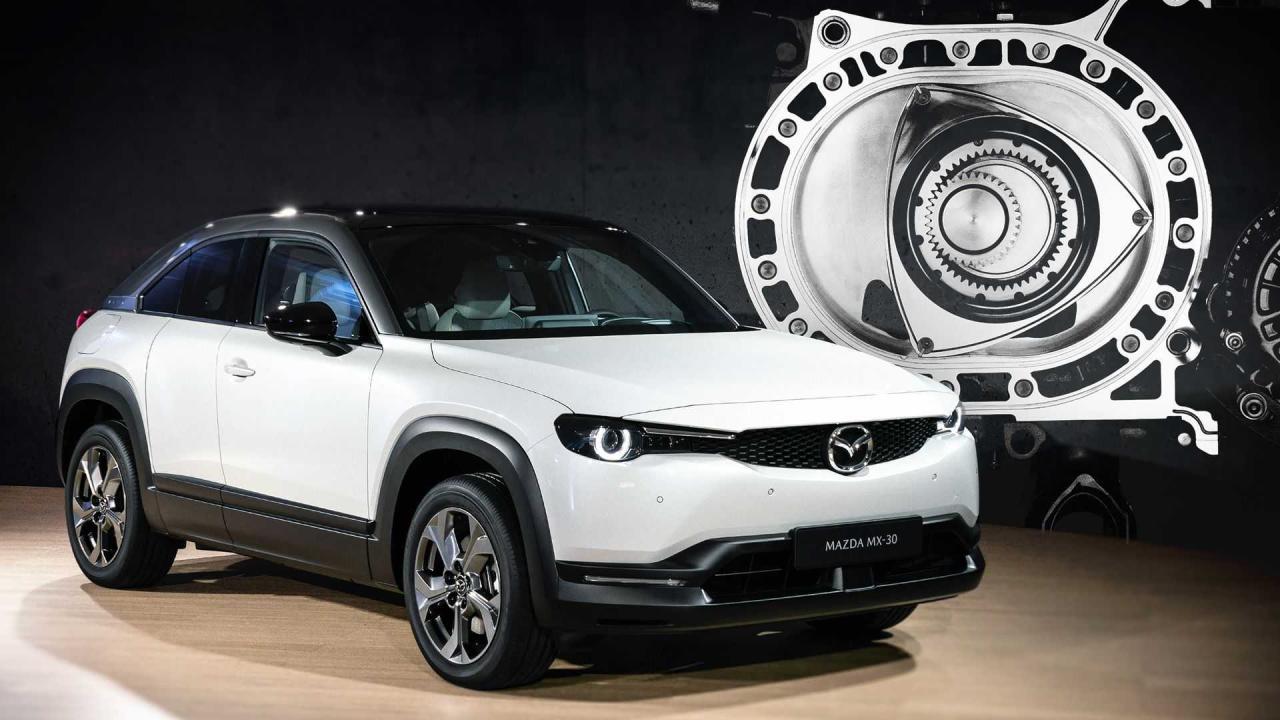
Unlike piston engines that use up-and-down motion converted into rotation, a rotary engine features a triangular rotor that orbits in a peanut-shaped chamber (epitrochoid housing). This direct rotational motion creates three separate combustion chambers per rotor, with each completing the four-stroke cycle (intake, compression, combustion, exhaust) in a continuous, smooth spin. This design yields significant benefits: exceptional mechanical simplicity with far fewer moving parts, a remarkably high power-to-weight ratio, and incredibly smooth, high-revving operation.
B. Mazda’s Historic Love Affair and Its Hurdles
Mazda was the only manufacturer to solve the rotary’s early durability issues and mass-produce it successfully, most famously in the legendary RX-7 and RX-8 sports cars. The engine’s smoothness, compact size, and thrilling high-RPM performance became synonymous with the brand. However, the romance faced pragmatic challenges. Traditional rotary engines historically struggled with:
-
Fuel Economy and Emissions: The engine’s design led to relatively poor thermal efficiency and higher unburned hydrocarbon emissions.
-
Apex Seal Wear: The seals at the tips of the rotor were prone to wear, affecting long-term reliability and oil consumption.
-
The Rise of Stringent Regulations: As global emissions standards tightened, the traditional rotary’s drawbacks made it commercially unviable as a primary propulsion engine.
The Phoenix Rises: Rotary as a Range Extender (R-EV)
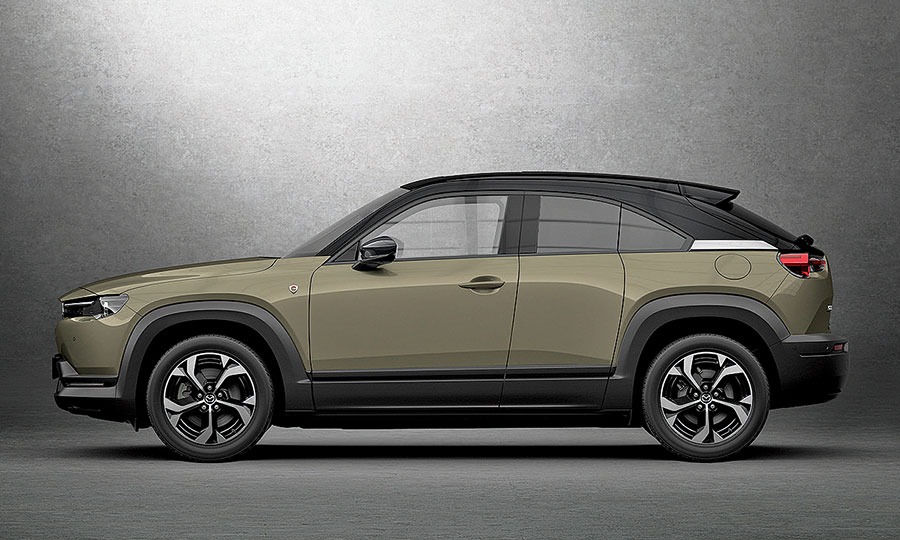
Mazda’s brilliance lies in reimagining the rotary’s application, turning its historical weaknesses into modern strengths by deploying it as a generator in a series-hybrid/range-extender EV setup, as seen in the Mazda MX-30 R-EV.
A. The Perfect Match: Why a Rotary for this Role?
In a range-extender EV, the internal combustion engine never directly drives the wheels. Its sole purpose is to generate electricity to recharge the vehicle’s battery pack when it is depleted, powering the electric drive motor. For this niche, the rotary’s attributes become exceptionally valuable:
-
Compactness and Lightweight: Its small physical footprint allows it to be packaged seamlessly alongside the electric motor, battery, and power electronics without compromising cabin or cargo space—a critical advantage in vehicle design.
-
Inherent Smoothness and Low Vibration: Vibration is a major challenge for range extenders, as a shaky, noisy generator ruins the serene EV driving experience. The rotary’s perfectly balanced rotational motion produces minimal vibration, making its operation barely noticeable to occupants.
-
High Power Density: A single-rotor, 830cc unit can generate sufficient power (over 50 kW) to effectively sustain the battery charge while driving, all from an exceptionally small and light package.
B. Engineering the Evolution: The 830cc Single-Rotor Generator
Mazda’s new rotary generator, dubbed the 8C, is a masterpiece of focused engineering. It is optimized for a single, efficient operating point its most efficient RPM band for generating electricity.
-
Direct Fuel Injection: This technology improves combustion efficiency and control, directly tackling historical fuel and emissions issues.
-
Exhaust Gas Recirculation (EGR): A high-capacity EGR system reduces pumping losses and lowers combustion temperatures, cutting nitrogen oxide (NOx) emissions.
-
Integrated Design: The engine, generator, and air intake system are compactly integrated into a single unit, enhancing efficiency and reducing noise.
The result is a generator that is quiet, smooth, and runs at optimal efficiency for its singular task, circumventing the traditional rotary’s drawbacks in broader driving conditions.
Inside the Mazda MX-30 R-EV: A Symphony of Synergy
The MX-30 R-EV is the first production vehicle to showcase this technology, offering a compelling “best of both worlds” proposition.
A. The Powertrain Architecture: How It All Works
The vehicle operates primarily as a pure electric car. It carries a 17.8 kWh lithium-ion battery smaller than most BEVs but sufficient for approximately 85 km (53 miles) of zero-emission, daily commuting. When the battery depletes, the rotary generator automatically starts.
-
In “Charging” Mode: The rotary engine generates electricity to both power the electric motor directly and to recharge the battery, extending the total driving range to over 600 km (373 miles).
-
Driver Control: A unique “Charge” mode button allows the driver to manually activate the generator to proactively replenish the battery, useful before entering a zero-emission zone or to ensure sufficient battery for urban driving later in a journey.
-
The Driving Experience: At all times, the wheels are driven by the 125 kW electric motor, delivering instant torque, smooth acceleration, and the quiet, responsive feel of an EV. The rotary’s operation is so refined that it merely provides a subtle, reassuring hum in the background.
B. Addressing “Range Anxiety” Without the Bulk
This setup provides a brilliant solution to range anxiety and charging dependency. Instead of lugging around a massive, heavy, and expensive 100 kWh battery for occasional long trips, the MX-30 R-EV uses a small, sustainable battery for daily use and a tiny, efficient generator for range extension. This reduces the carbon footprint of battery production, keeps vehicle weight lower, and offers the freedom to refuel in minutes at any gas station for uninterrupted long-distance travel.
The Multifaceted Advantages of Mazda’s Rotary EV Strategy
Mazda’s approach is not merely a technical curiosity; it presents a series of strategic advantages in the current automotive climate.
A. Sustainability and “Well-to-Wheel” Efficiency
Mazda promotes a “Right-Sizing” philosophy for batteries. Large batteries are resource-intensive to manufacture. By pairing a smaller battery with an efficient generator, the overall environmental impact, especially for drivers who regularly take trips beyond the average daily commute, can be lower when considering the full “well-to-wheel” energy cycle, particularly in regions where the electrical grid is still reliant on fossil fuels.
B. Uncompromised Vehicle Design and Packaging
The rotary generator’s compactness grants Mazda’s designers unparalleled freedom. It enables more flexible vehicle architectures, better weight distribution (approaching the ideal 50:50 front-rear balance), and preserves interior space. This allows the creation of exciting, driver-centric EVs that don’t sacrifice style or dynamics for range.
C. A Bridge Technology with Soul
For enthusiasts and markets where charging infrastructure is sparse, the rotary range extender acts as a practical and emotional bridge to full electrification. It provides EV benefits in daily use, eliminates range anxiety, and maintains the visceral connection to engineering passion that Mazda owners cherish. It keeps the rotary’s spirit and unique sound alive in the electric era.
D. Potential for Multi-Fuel Capability
The rotary engine’s design is inherently adaptable to various fuels. Future iterations could potentially run efficiently on hydrogen, synthetic e-fuels, or biofuels, transforming the generator into a carbon-neutral range extender as the energy ecosystem evolves, future-proofing the vehicle.
Critical Analysis: Perceived Challenges and Market Positioning
No innovation is without its context of challenges. Some analysts question the rotary R-EV’s positioning.
A. The Complexity Argument: Is It an Overengineered Hybrid?
Critics may argue that a series-hybrid with a conventional piston engine could achieve similar efficiency. However, they would miss the point regarding packaging, smoothness, and NVH (Noise, Vibration, Harshness). The rotary’s advantages in these areas are intrinsic and significant, offering a superior refinement level that aligns with the premium EV experience.
B. Competition with Plug-In Hybrids (PHEVs) and BEVs
The MX-30 R-EV competes in a complex space. Compared to a PHEV, its engine never drives the wheels, offering a purer, more consistent EV driving feel. Compared to a long-range BEV, it offers faster “recharging” via fuel and less raw material use. Its success hinges on consumers valuing its specific blend of daily electric driving, unlimited extended range, and unique engineering character over the sheer all-electric range of a BEV or the lower cost of some PHEVs.
The Road Ahead: Future Applications and Enthusiast Dreams
The MX-30 R-EV is likely just the beginning. Mazda has patented designs for a twin-rotor range extender and has hinted at more performance-oriented applications.
A. The Sports Car Resurrection
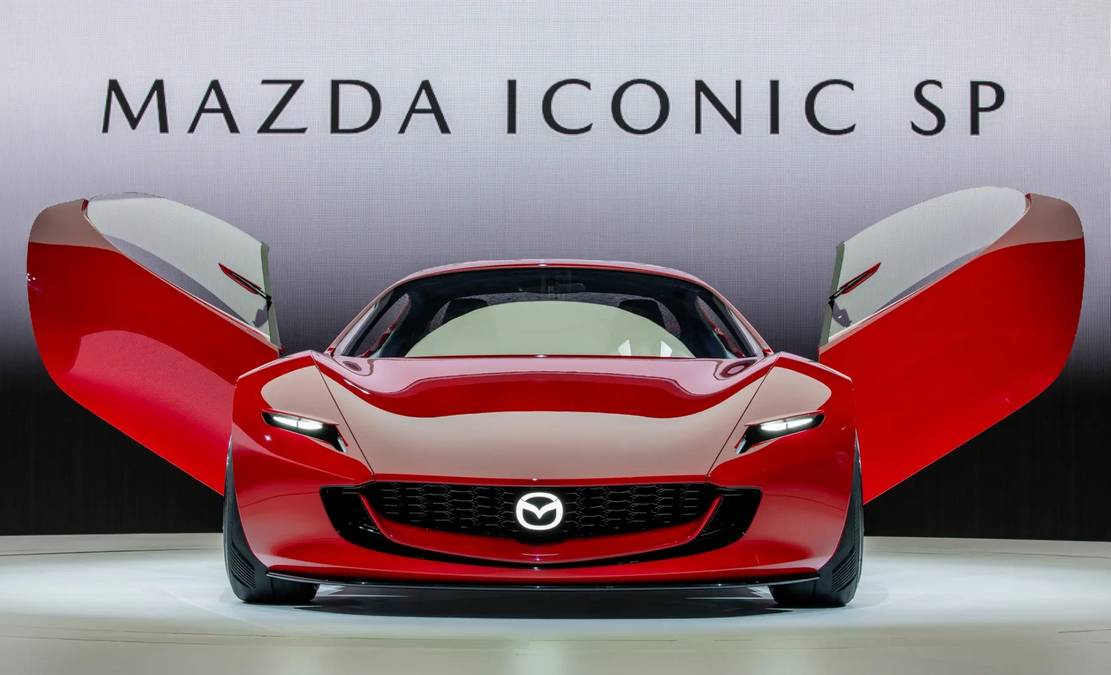
The dream scenario for enthusiasts is a successor to the RX-7 or RX-8. Imagine a lightweight, agile sports car with a moderate battery for instant torque and a high-revving, multi-rotor generator that sustains performance on track days or thrilling drives. This could deliver electrified performance without the crippling weight of a large battery, staying true to Mazda’s sports car philosophy.
B. Larger Vehicles and Global Markets
This technology is perfectly scalable. A twin-rotor generator could enable larger vehicles like SUVs or crossovers to offer compelling EV characteristics with minimal range limitations, making it a potent solution for the North American market, for example.
Conclusion: A Bold Stroke of Engineering Poetry
Mazda’s rotary EV is far more than a clever workaround; it is a testament to the power of creative, human-centric engineering. In a world racing toward an electrified future, Mazda has paused to ask how to make that future more versatile, more engaging, and more inclusive of diverse driving needs and global infrastructure realities. By resurrecting and redefining its most iconic powertrain, Mazda has not only preserved a piece of automotive soul but has potentially created one of the most pragmatic and elegant transition technologies towards a sustainable driving future. The rotary, once a symbol of pure combustion passion, has been reborn as the harmonious partner to the electric motor, ensuring that the journey to zero emissions need not be silent, bland, or fraught with anxiety, but can instead be filled with the quiet confidence of innovative genius.