

The automotive world is undergoing a silent revolution, one that extends far beyond the zero-emission tailpipes and quiet hum of electric vehicles (EVs). As millions of EVs hit the roads globally, a pressing and potentially profitable question emerges: what happens to their batteries once they can no longer efficiently power a car? Contrary to the image of toxic waste, a monumental opportunity is unfolding a modern-day “gold rush” centered not on precious metals alone, but on the immense residual value and utility locked within used EV battery packs. This isn’t merely about disposal; it’s about pioneering a sophisticated circular economy that promises substantial financial returns, enhances energy security, and bolsters environmental sustainability.
Understanding the Core: EV Battery Degradation and “Second Life”
An EV battery is typically considered for replacement when its capacity falls to 70-80% of its original state. This degradation, while reducing a vehicle’s driving range, does not render the battery useless. Instead, it transitions the battery from the rigorous demands of automotive propulsion to a new phase: “Second Life.”
In this phase, the battery still holds significant capacity for less demanding applications. Imagine a retired marathon runner transitioning to coaching or hiking; the core strength and endurance remain highly valuable in a different context. A “second-life” battery pack retains enough energy density and power to serve for an additional 5 to 15 years in stationary energy storage systems. This fundamental shift in perspective from waste to resource is the bedrock of the used EV battery economy.
The Driving Forces Behind the Gold Rush
The surge in interest and investment in this sector is not accidental. It is propelled by several powerful, interconnected market forces and technological trends.
A. The Exponential Growth of the EV Market
Global EV sales are skyrocketing, with projections indicating hundreds of millions of EVs on roads by 2030. Each vehicle contains a battery pack weighing hundreds of kilograms. This creates a predictable and massive incoming stream of batteries that will reach their end-of-life in vehicles over the next decade. The scale of this impending wave makes establishing recovery and repurposing channels not just an ecological imperative, but a critical business necessity.
B. Soaring Demand for Energy Storage Solutions
The global transition to renewable energy sources like solar and wind is fundamentally intermittent. The sun doesn’t always shine, and the wind doesn’t always blow. This creates an urgent need for large-scale, cost-effective energy storage to stabilize electrical grids, store excess renewable generation, and provide backup power. Second-life EV batteries offer a compelling, lower-cost alternative to brand-new storage batteries, accelerating the adoption of renewables.
C. Volatility and Ethics in Raw Material Supply Chains
Key battery materials like lithium, cobalt, nickel, and manganese are subject to geopolitical tensions, supply chain bottlenecks, and ethical mining concerns. Recycling and repurposing batteries mitigate these risks by creating a domestic, closed-loop supply of critical materials. This reduces reliance on volatile foreign markets and addresses serious environmental and social issues associated with raw material extraction.
D. Strengthening Environmental Regulations and ESG Mandates
Governments worldwide are implementing stricter regulations on battery disposal and enacting Extended Producer Responsibility (EPR) laws, holding manufacturers accountable for the entire lifecycle of their products. Simultaneously, investors and consumers are demanding strong Environmental, Social, and Governance (ESG) performance. Companies that develop robust second-life and recycling programs gain regulatory compliance and a significant competitive edge in the marketplace.
The Multi-Tiered Value Chain: From Assessment to Reincarnation
The journey of a used EV battery from a car to its next purpose is a complex, multi-stage process that unlocks value at every step.
A. Collection, Diagnostics, and Sorting
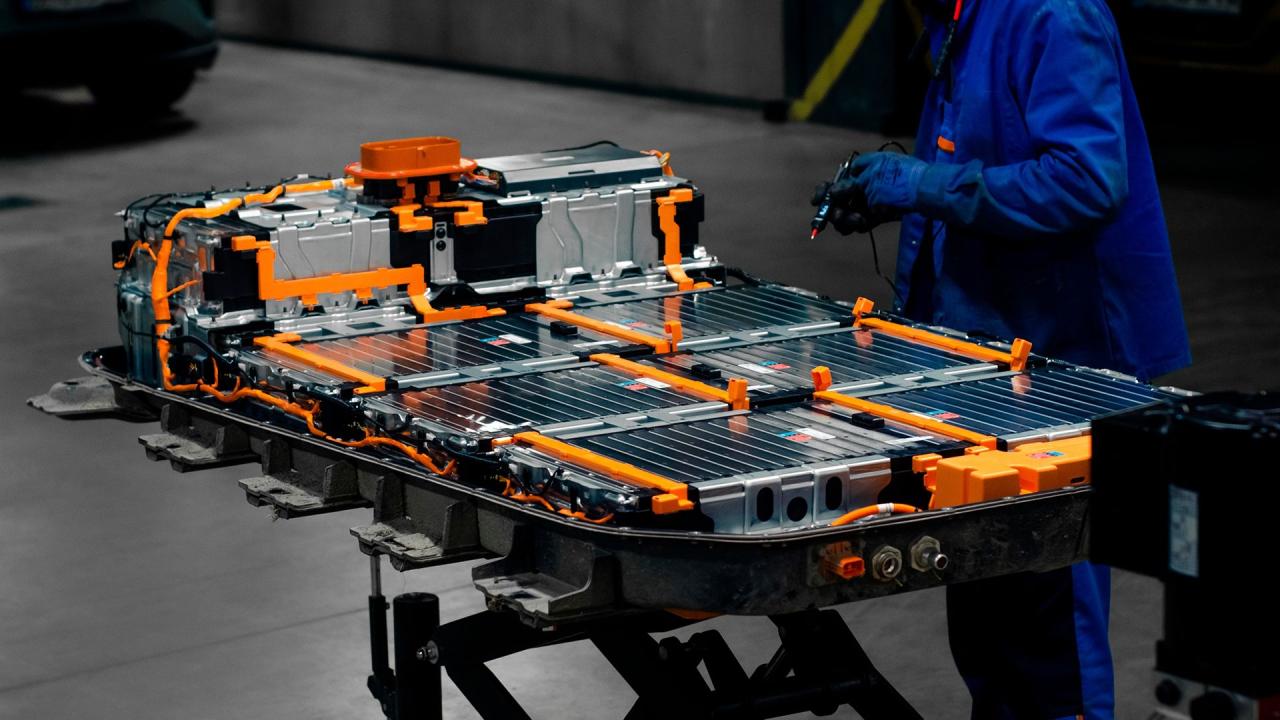
The first critical step is the safe decommissioning and transportation of battery packs from dealerships or salvage yards to specialized facilities. Here, advanced diagnostic tools are used to assess each battery module’s State of Health (SOH), remaining capacity, internal resistance, and overall safety. Sophisticated sorting algorithms then determine the optimal pathway for each module: direct reuse, repurposing, or recycling.
B. The Repurposing Pathway: Giving Batteries a Second Life
For batteries with sufficient health, repurposing is the most value-retentive option. This involves:
-
Disassembly: Carefully breaking down the pack into individual modules or cells.
-
Re-testing and Re-grading: Grouping cells with similar performance characteristics to ensure balance and safety in the new configuration.
-
System Integration: Incorporating these graded modules into new housings with integrated Battery Management Systems (BMS), thermal controls, and power electronics.
-
Deployment: Installing these new storage units into their second-life applications.
C. The Recycling Pathway: Urban Mining for Precious Materials
When batteries are too degraded or damaged for second use, they enter the recycling stream—a process often called “urban mining.” Modern recycling uses two primary methods:
-
Pyrometallurgy: Involves high-temperature smelting to recover a alloy of metals. It’s robust but less precise and energy-intensive.
-
Hydrometallurgy: Uses chemical leaching solutions to selectively dissolve and separate individual metal compounds (lithium carbonate, cobalt sulfate, etc.). This method is becoming more favored for its higher recovery rates of purer materials, especially for lithium.
Advanced direct recycling methods, which aim to recover cathode materials intact for direct reuse in new batteries, are also on the horizon, promising even greater efficiency.
Lucrative Applications: Where Second-Life Batteries Thrive
The markets for repurposed batteries are diverse and expanding rapidly, each representing a distinct revenue stream.
A. Grid-Scale Energy Storage and Services
This is the most impactful application. Aggregated second-life batteries can be deployed in massive arrays to provide grid services such as frequency regulation, peak shaving (reducing demand during high-cost periods), and congestion relief. They act as giant shock absorbers for the electricity grid, earning revenue from utility companies.
B. Commercial and Industrial (C&I) Backup Power and Demand Charge Management
Businesses face high “demand charges” based on their peak power usage. A second-life battery system can discharge during these short peak periods, dramatically lowering electricity bills. They also provide reliable backup power during outages, protecting operations and data.
C. Renewable Energy Integration for Homes and Microgrids
Paired with residential solar panels, second-life batteries allow homeowners to store excess daytime energy for use at night, maximizing self-consumption and independence. On a larger scale, they are fundamental components of community microgrids and remote off-grid power systems, enabling cleaner, more resilient energy access.
D. EV Charging Infrastructure Support
Fast-charging stations place immense, sudden loads on local transformers. A buffer bank of second-life batteries can be slowly charged from the grid and then rapidly discharged to top up a waiting EV, preventing costly grid upgrades and enabling high-power charging in areas with limited grid capacity.
E. Emerging and Niche Markets
From powering electric forklifts in warehouses to providing auxiliary power for maritime and telecommunications applications, the potential uses are continually growing. Their lower cost makes electrification feasible in sectors where new battery costs were previously prohibitive.
Navigating the Challenges: Hurdles on the Path to Profit

Despite the immense potential, this gold rush faces significant obstacles that must be strategically managed.
A. Technical and Logistical Complexities
EV batteries are not designed for easy disassembly. A lack of standardization across manufacturers—in cell chemistry, module design, pack architecture, and BMS software makes automated processing difficult and costly. Developing flexible, robotics-driven disassembly lines and universal diagnostic protocols is essential.
B. Economic and Market Uncertainties
The long-term performance and degradation rates of second-life batteries in new applications are still being studied, affecting warranties and financing models. The fluctuating prices of virgin raw materials also impact the economic viability of recycling. A collapse in cobalt prices, for instance, can temporarily disincentivize recycling.
C. Safety, Liability, and Regulatory Frameworks
Handling high-voltage systems carries inherent risks. Establishing clear safety standards for testing, transportation, and repackaging is paramount. Furthermore, liability chains can be murky: who is responsible if a repurposed battery system fails? Developing industry-wide standards and regulatory frameworks is critical for consumer and insurer confidence.
D. Collection and Reverse Logistics Networks
Efficiently collecting scattered, heavy, and potentially hazardous battery packs from across a vast geography is a massive logistical challenge. Building cost-effective reverse logistics networks is a foundational requirement that the industry is still scaling.
The Future Horizon: Innovation and Long-Term Vision
The used battery ecosystem is poised for dramatic evolution, driven by innovation and long-term strategic thinking.
A. Design for Circularity from the Start
The future lies in “circular by design.” EV manufacturers are increasingly designing batteries with second life and recycling in mind. This includes using easier-to-disassemble adhesives, standardizing module formats, implementing digital battery passports (with full lifecycle data), and choosing chemistries that are easier to recycle, like lithium iron phosphate (LFP).
B. Advanced AI and Machine Learning Integration
Artificial intelligence will revolutionize this field. AI algorithms can optimize disassembly routes, predict remaining battery life with extreme accuracy based on usage data, and automate the sorting and grading process, dramatically reducing costs and improving safety.
C. The Integration of Vehicle-to-Grid (V2G) Technology
V2G allows an EV to discharge energy back to the grid while plugged in. While not a “second life,” it represents a complementary paradigm where the battery provides value during its primary automotive life, blurring the lines between transportation and energy assets and creating additional revenue streams for EV owners.
D. The Rise of Super-Factories: Co-location and Synergy
We are beginning to see the emergence of integrated “Giga-factories” where battery production, EV manufacturing, repurposing facilities, and recycling plants co-exist on one site. This creates unparalleled synergies, minimizes transportation, and allows for immediate recovery of production scrap, setting the gold standard for a closed-loop system.
Conclusion: A Strategic Imperative, Not a Niche Opportunity
The used EV battery gold rush is far more than a speculative venture. It represents a cornerstone of the sustainable energy and transportation future. For entrepreneurs and investors, it offers a chance to be at the forefront of a multi-billion-dollar emerging market. For automakers, it is a strategic imperative for cost reduction, regulatory compliance, and brand leadership. For society, it is a crucial pathway to reducing environmental impact, conserving scarce resources, and building a resilient, renewable-powered grid.
The race is on to develop the technologies, business models, and partnerships that will dominate this new landscape. Those who view the end of an EV’s road not as a final destination, but as the beginning of a valuable new journey, will be the ones to strike it rich in this twenty-first-century gold rush transforming what was once considered waste into the very foundation of a cleaner, more prosperous, and circular economy. The treasure is real, and it is waiting to be unlocked.