
For millennia, human progress has been shadowed by the risk of accidental harm. From industrial workplaces to our daily commutes and homes, unforeseen errors have exacted a heavy toll on lives and economies. Today, we stand at the precipice of a historic transformation. The convergence of advanced artificial intelligence, ubiquitous sensor networks, and predictive analytics is birthing a new paradigm: intelligent systems capable of not just reacting to, but proactively preventing accidents before they manifest. This in-depth exploration delves into the mechanics, applications, ethical dimensions, and profound future implications of AI-driven accident prevention, a technological leap poised to redefine safety in the 21st century.
A. Deconstructing the Architecture: Core Technologies Powering AI Safety
The vision of a zero-accident world is not powered by a single algorithm, but by a sophisticated, multi-layered technological ecosystem. Understanding its components is key to appreciating its potential.
A. Advanced Sensor Fusion and IoT Integration: The foundational layer is a vast, interconnected nervous system. This includes high-resolution cameras, LiDAR, radar, thermal imaging, acoustic sensors, and a proliferating array of Internet of Things (IoT) devices. These sensors continuously feed real-time data on environmental conditions, object movements, structural integrity, and human biometrics. AI doesn’t just collect this data; it performs sensor fusion, synthesizing information from diverse sources to create a dynamic, hyper-accurate model of the world.
B. Predictive Analytics and Deep Learning: At the heart of prevention lies prediction. Deep learning models, particularly recurrent neural networks (RNNs) and temporal convolutional networks (TCNs), are trained on colossal historical datasets of near-misses and actual accidents. They learn to identify subtle, precursor patterns invisible to the human eye—a micro-expression of driver fatigue, a specific vibration pattern signaling mechanical failure, or a sequence of behaviors indicating a potential slip or fall. This moves safety from a reactive domain (“an alarm sounds when gas is detected”) to a predictive one (“the system predicts a 92% probability of a leak in 8 hours based on pressure anomalies and valve wear patterns”).
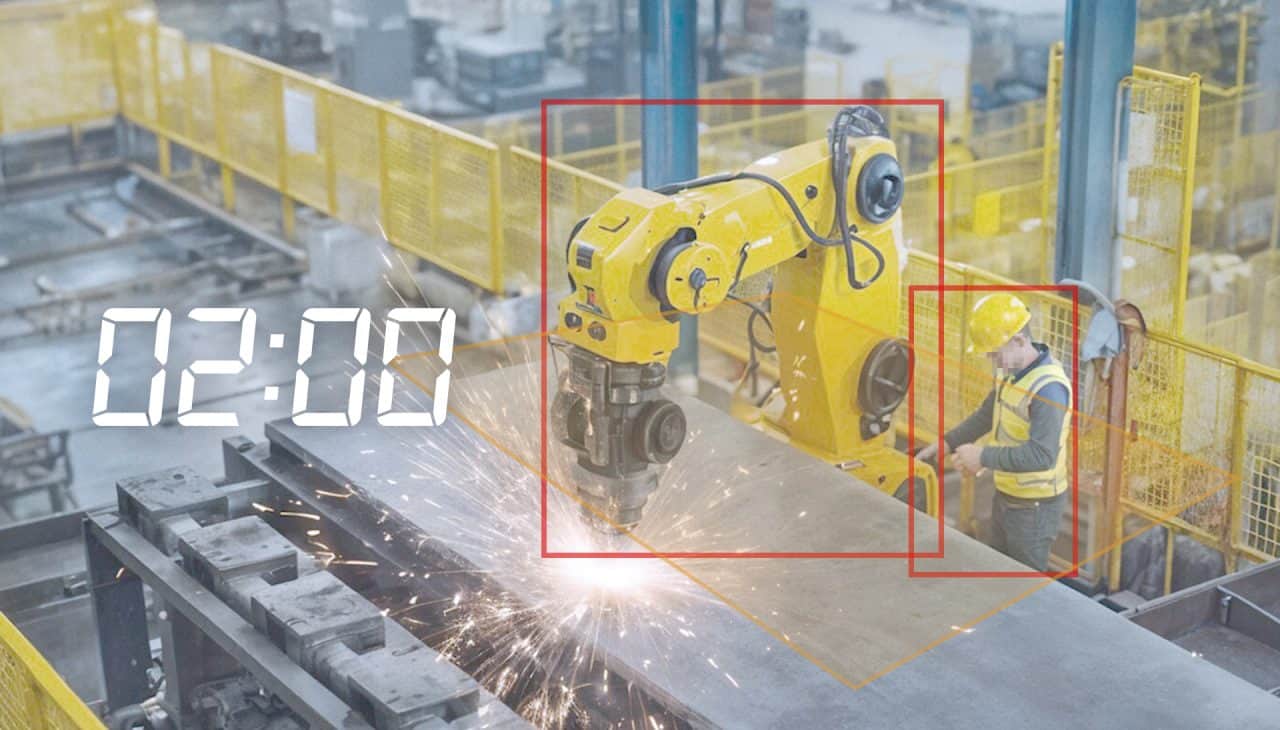
C. Real-Time Decision Engines and Autonomous Intervention: Prediction alone is insufficient without action. AI decision engines, operating at millisecond speeds, analyze predictive warnings and execute pre-programmed interventions. These can range from gentle alerts to direct, autonomous control. In a vehicle, it might seamlessly adjust steering or braking. In a factory, it could disable a robotic arm’s trajectory or shut down a production line. The system evaluates the risk matrix and chooses the least disruptive yet most effective intervention strategy.
D. Digital Twin Technology: For complex environments like power grids, chemical plants, or entire cities, AI leverages digital twins—virtual, real-time replicas of physical systems. Simulations of stress scenarios, equipment failures, or human flow are run continuously in the digital twin. The AI can experiment with mitigation strategies in this risk-free virtual space and apply the optimal solution to the physical counterpart, preventing accidents through continuous, proactive stress-testing.
B. Transformative Applications Across Critical Sectors
The practical deployment of AI safety systems is already underway, yielding dramatic results across diverse fields.
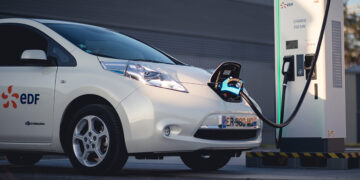
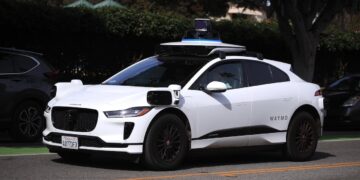
A. Transportation and Mobility: This sector is experiencing the most visible acceleration. Modern vehicles are evolving into rolling safety data centers. AI analyzes driver attentiveness, pupil dilation, and steering micro-corrections to detect impairment before danger arises. Externally, vehicle-to-everything (V2X) communication allows cars to “talk” to each other, to traffic signals, and to infrastructure, creating a cooperative awareness that can prevent collisions at intersections or on blind curves. In aviation, AI co-pilots monitor thousands of data points, predicting mechanical issues and suggesting optimal flight paths to avoid severe weather, long before pilots might notice a problem.
B. Industrial and Manufacturing Safety: Factories and construction sites are becoming intelligent environments. Computer vision AI monitors workers for correct PPE usage, detects entry into hazardous zones, and alerts if a worker’s posture suggests risk of musculoskeletal injury. Predictive maintenance on machinery, powered by AI analysis of vibration, sound, and thermal data, prevents catastrophic equipment failures. Drones and robots inspect hazardous areas like tall structures or confined spaces, removing humans from danger entirely.
C. Healthcare and Medical Error Prevention: Medical mistakes are a leading cause of accidental death. AI is combating this by cross-referencing patient records, lab results, and real-time vitals to flag potential allergic reactions, dangerous drug interactions, or early signs of sepsis. Surgical robots equipped with AI provide enhanced precision and can have “no-go” zones programmed into their path, preventing accidental nicks to vital organs. AI-powered diagnostic support reduces errors in image analysis for radiology and pathology.
D. Public Infrastructure and Disaster Prevention: Smart cities are embedding AI into their core. Systems analyze data from sensors on bridges, dams, and buildings to predict structural failures. In wildfire prevention, AI analyzes satellite imagery, weather data, and ground sensor inputs to predict fire outbreaks and optimize the deployment of resources. For flood management, AI models rainfall, topography, and drainage capacity in real-time to direct water flows and issue hyper-localized evacuation warnings.
E. Home and Personal Safety: The domestic sphere is also getting safer. Next-generation smart home systems go beyond locking doors. They can detect the smell of electrical smoldering before a fire starts, identify water leaks inside walls, and monitor for falls among the elderly, automatically alerting emergency contacts. AI-powered kitchen appliances can even prevent common cooking accidents, like automatically shutting off a stove left unattended.
C. Navigating the Complex Landscape of Challenges and Ethical Considerations
The path to an accident-free world is fraught with significant technical, ethical, and societal hurdles that must be deliberately addressed.
A. The Data Dilemma: Privacy vs. Protection: These systems require massive, continuous data collection, often of a deeply personal nature (location, behavior, biometrics). Striking a balance is paramount. Solutions involve robust data anonymization, strict “privacy-by-design” principles, transparent user consent protocols, and on-device processing where possible to keep sensitive data from ever leaving a personal device.
B. Algorithmic Bias and Equity: An AI is only as good as its training data. If historical data reflects societal biases (e.g., under-representation of certain demographics in driving data), the AI’s safety predictions may be less accurate for those groups, creating unequal protection. Ongoing audits, diverse dataset curation, and bias-detection algorithms are non-negotiable for building fair and universally effective systems.
C. Liability and Accountability: When an AI system prevents an accident, it’s celebrated. But who is responsible if it fails, or if its autonomous intervention causes a new harm? The legal framework is lagging. Clear liability chains must be established among manufacturers, software developers, operators, and regulators. New insurance models and ethical guidelines for AI decision-making in crisis scenarios are urgently needed.
D. Over-Reliance and Skill Atrophy: As AI systems become more capable, a dangerous complacency can set in. Pilots, drivers, doctors, and machine operators may experience skill degradation if they become mere supervisors of AI. Ensuring humans remain “in-the-loop” for critical decisions and mandating ongoing skill training is essential to maintain a resilient safety net.
E. Cybersecurity: The New Frontier of Safety: A hyper-connected safety infrastructure presents a colossal attack surface. A malicious actor hacking into a city’s traffic AI or a vehicle’s control system could cause unprecedented harm. Therefore, cybersecurity is no longer just about data theft; it is a fundamental pillar of physical safety. Systems must be built with unbreachable encryption, zero-trust architectures, and constant threat monitoring.
D. The Future Horizon: Integration, Adaptation, and Societal Shift
Looking ahead, the evolution of AI safety points toward even more profound integration and intelligence.
A. The Rise of Proactive Public Health: AI will move from preventing acute, physical accidents to preventing chronic health “accidents.” By analyzing lifestyle data, genetic predispositions, and environmental factors, AI could provide hyper-personalized guidance to prevent diseases like diabetes or heart conditions, framing poor health outcomes as preventable events.
B. Global Integrated Safety Networks: Imagine a global AI safety layer. Data from transportation networks, weather systems, and infrastructure across continents could be anonymized and aggregated. This would enable the prediction and mitigation of large-scale, cascading disasters, optimizing global response to pandemics, supply chain disruptions, or climate-related events.
C. Moral and Explainable AI (XAI): Future systems will need to make not just logical, but ethical decisions in unavoidable accident scenarios. Furthermore, “black box” algorithms are unacceptable for life-and-death systems. The field of Explainable AI (XAI) is crucial to develop models that can clearly articulate why they made a particular safety decision, building essential public trust and enabling regulatory oversight.
D. Economic Transformation and New Paradigms: The widespread adoption of accident-preventing AI will disrupt industries. Insurance will shift from actuarial models based on human error to technical assessments of system integrity. Professions centered on risk and emergency response will evolve. The tremendous economic cost of accidents healthcare, property damage, lost productivity will be redirected toward innovation and growth, potentially creating one of the greatest economic dividends in history.
Conclusion: A Conscious Choice for a Safer Tomorrow

The development of AI that prevents accidents represents more than a technological achievement; it is a moral imperative and a testament to human ingenuity. While the challenges are substantial, they are not insurmountable. They require a collaborative, transparent, and ethically grounded approach from engineers, policymakers, ethicists, and the public. The goal is not to create an infallible, controlling overlord, but to construct an intelligent, ever-vigilant shield a partner that extends our senses, enhances our judgment, and guards against the costly randomness of misfortune. By deliberately steering this technology with wisdom and foresight, we have the unprecedented opportunity to write a new chapter in human history, one where the specter of accidental harm is finally and permanently diminished. The journey toward a world without accidents is not a fantasy; it is the next, necessary step in our collective progress.