
The Federal Aviation Administration (FAA) has granted a pivotal, foundational type certification to a leading electric vertical takeoff and landing (eVTOL) vehicle, marking the single most significant regulatory milestone to date for the Advanced Air Mobility (AAM) industry in the United States. This authorization effectively bridges the gap between years of ambitious prototyping, rigorous testing, and the imminent reality of commercial passenger operations. It signals the official beginning of a new chapter in urban and regional transportation, promising to reshape how we conceptualize distance, commute times, and urban connectivity. This article provides an exhaustive analysis of this groundbreaking development, exploring the technology behind the revolution, the intricate path to certification, the profound implications for cities and citizens, the formidable challenges that remain, and the future trajectory of an industry now cleared for takeoff.
A. Deconstructing the Technology: The eVTOL Machine
At the heart of this revolution lies the eVTOL aircraft. Unlike traditional helicopters, these vehicles are designed with redundancy, quiet operation, and sustainability as core principles.
A. Propulsion and Powertrain: eVTOLs utilize distributed electric propulsion (DEP). This involves multiple independent electric motors and rotors or propellers. This architecture provides critical safety through redundancy; if one or even several motors fail, the remaining ones can compensate to ensure a safe landing. The electric motors are powered by high-density, aerospace-grade lithium-ion or next-generation solid-state battery packs, producing zero operational emissions.
B. Flight Regimes and Design Configurations: Most eVTOLs operate in two distinct modes. They take off and land vertically like a helicopter, using dedicated lift rotors. Once airborne, they transition to forward flight, where wing-borne lift (like an airplane) becomes primary, offering vastly greater efficiency, range, and speed. Common designs include multicopter (many fixed rotors), vectored thrust (rotors that tilt), and lift-and-cruise (separate sets of rotors for vertical and forward flight).
C. Advanced Avionics and Autonomy: These aircraft are “fly-by-wire,” controlled by sophisticated computers interpreting pilot inputs. They are equipped with a suite of sensors radar, lidar, cameras, and ultrasonic detectors for obstacle detection and avoidance. While initial services will have a human pilot in the loop, the design path for most manufacturers leads toward increasingly automated systems and, eventually, fully autonomous flight.
D. Noise Profile: A key advantage over helicopters is dramatically reduced acoustic signature. Electric motors are inherently quieter than turbine engines, and the design of rotors and operational profiles aims to keep noise below 65 decibels during flyover, comparable to background urban traffic, making them more community-friendly.
B. The Marathon to Certification: Decoding the FAA’s Landmark Approval
The FAA’s type certification is not a simple permit; it is a comprehensive validation that the aircraft meets the highest standards of safety, airworthiness, and reliability. Achieving it is a Herculean task.
A. The Regulatory Framework: The FAA did not have pre-existing regulations for this novel vehicle category. It has been adapting existing regulations for small airplanes (Part 23) and leveraging special conditions to address the unique aspects of eVTOL design, particularly around propulsion, flight controls, and battery safety. This certification proves the vehicle is equivalent in safety to existing certified aircraft.
B. The Rigorous Testing Pathway: To earn certification, a company must pass through phases of exhaustive testing. This includes:
* Ground Tests: Structural stress tests, bench testing of motors and batteries, and thousands of hours of software simulation.
* Flight Tests: A progressive campaign from hover tests to full transition flights, performance envelope expansion, and failure mode testing (e.g., simulating motor loss).
* Systems Tests: Validating redundancy in flight controls, navigation, and communications under diverse and extreme conditions.
C. Beyond the Aircraft: The Ecosystem Approval: Type certification is just the first of three critical FAA approvals needed for commercial service. Next comes Production Certification, ensuring every aircraft rolling off the assembly line is identical and meets the certified design. Finally, the operator must obtain an Air Carrier Certificate (under Part 135), proving they have the operational procedures, maintenance programs, and trained personnel to run a safe airline.
D. A Global Regulatory Race: The FAA’s move places the U.S. firmly in a competitive global race with Europe’s EASA and regulators in Asia, who are also progressing with their own certification frameworks. This first-mover advantage has significant implications for export potential and setting de facto global safety standards.
C. The Promised Transformation: Implications for Cities, Economy, and Society
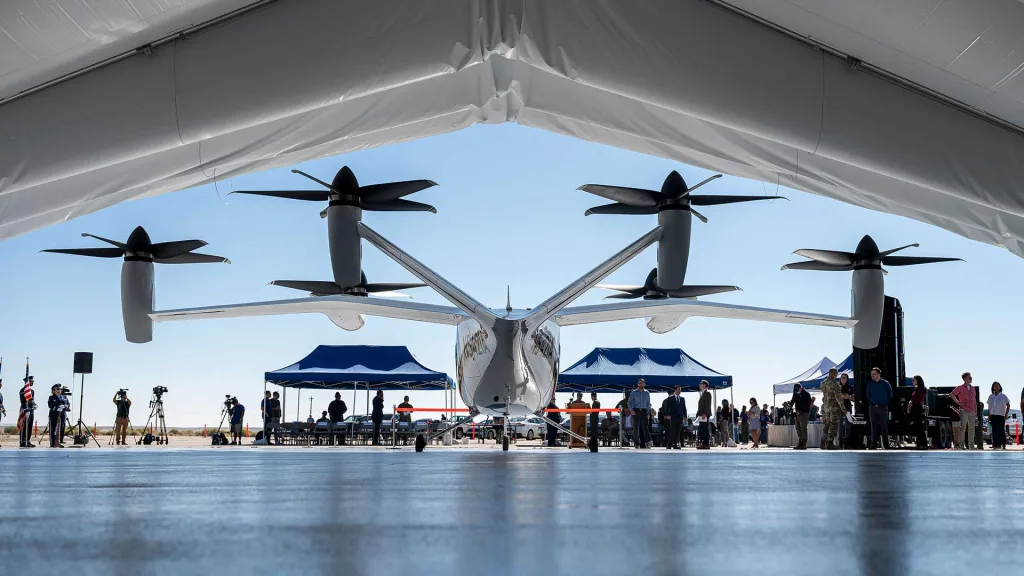
The operationalization of air taxi services portends a multi-faceted transformation with both immediate and long-term consequences.
A. Redefining Urban and Regional Mobility: The primary value proposition is time savings. Routes that take 60-90 minutes in ground traffic could be reduced to 10-15 minute flights. This could connect:
* Major airports to downtown city centers (e.g., JFK to Manhattan).
* Across sprawling metropolitan areas (e.g., San Jose to San Francisco).
* Urban cores to outlying suburban or exurban business hubs, effectively expanding the feasible commuting radius.
B. Economic and Infrastructure Impact: The AAM industry is projected to grow into a multi-billion dollar market, creating high-tech manufacturing jobs, pilot and maintenance roles, and software development positions. It will spur investment in new infrastructure: Vertiports. These are not large airports but modular hubs atop parking garages, existing helipads, or transportation centers, featuring charging stations and passenger lounges.
C. Environmental Considerations: While direct emissions are zero, the full environmental footprint depends on the source of the electricity used for charging. As grids become greener, the sustainability benefit amplifies. Furthermore, by offering an alternative to carbon-intensive short-haul flights and long car commutes, eVTOLs could contribute to net reductions in urban transportation emissions.
D. Accessibility and Equity: A critical challenge and opportunity. Initial services will likely be premium-priced. However, industry proponents envision scaling and competition driving costs down towards the level of ground ride-sharing. Integrating air mobility with public transit systems could create seamless, multi-modal journeys, potentially improving access for underserved communities if strategically planned.
D. Navigating Turbulence: Critical Challenges on the Horizon
The path to normalized air taxi service is fraught with complex, unresolved challenges that must be addressed for the industry to achieve its potential.
A. Air Traffic Management (ATM) Integration: This is arguably the greatest technical hurdle. Integrating hundreds or thousands of low-altitude eVTOL flights into already congested airspace, especially near cities, requires a new system. The FAA and NASA are developing Unmanned Traffic Management (UTM) or Advanced Air Mobility (AAM) corridors largely automated, digital systems that will manage flight paths, deconflict traffic, and ensure safe separation without overburdening human air traffic controllers.
B. Public Acceptance and Community Noise: Technology acceptance is social, not just regulatory. Community concerns about noise, privacy, and safety must be proactively addressed. Transparent engagement, verified low-noise demonstrations, and careful, equitable vertiport siting are essential to build the “social license to operate.”
C. Cost and Business Model Viability: The upfront costs of aircraft, vertiport development, and certification are enormous. Developing a business model that achieves profitability while making the service accessible beyond a luxury niche is a fundamental commercial challenge. Partnerships with cities, airlines, and ride-sharing platforms will be key.
D. Workforce and Pilot Training: A new industry requires a new workforce. While automation will increase, certified pilots will be needed for the foreseeable future. Developing standardized training programs for eVTOL pilots, who must master both multi-engine aircraft and vertical flight principles, is an urgent need.
E. Battery Technology and Infrastructure: Current battery energy density limits practical range and payload. Breakthroughs in solid-state or lithium-metal batteries are keenly anticipated. Furthermore, vertiports will require robust, high-power charging networks and potentially battery-swapping solutions to maintain high aircraft utilization rates.
E. The Flight Path Ahead: What Comes After Initial Certification?
The first certification is a starting gun, not a finish line. The coming years will see rapid evolution.
A. The Scaling Phase: The certified manufacturer now must ramp up serial production. Other major players in the sector will follow closely with their own certification submissions, leading to a more competitive and diverse market of vehicle designs.
B. The Pilot Phase and Route Expansion: We will see limited pilot programs in select cities (like Los Angeles, Miami, or Dallas-Fort Worth) starting around 2025-2028. These will begin with a few vertiports and expand networks based on demand, operational data, and community feedback.
C. Technological Evolution: The next decade will focus on incremental improvements: longer-range aircraft (150+ miles), enhanced automation moving toward autonomy, improved battery recharge times, and more efficient rotor designs for even lower noise.
D. Regulatory Evolution: The FAA will transition from using special conditions to developing formal, stand-alone regulations for powered-lift vehicles, providing clearer long-term guidelines for the entire industry.
Conclusion

The FAA’s type certification of an eVTOL air taxi is a watershed moment, transitioning Urban Air Mobility from the realm of concept videos and test flights into the tangible domain of certified aviation. It validates the engineering prowess and safety commitment of the pioneers in this field. While the sight of air taxis flitting between skyscrapers may not become ubiquitous overnight, the regulatory foundation is now firmly laid. The journey ahead involves meticulous work building public trust, integrating with air traffic control, proving economic models, and creating a scalable ecosystem. Yet, the promise is undeniable: a faster, cleaner, and more connected future for urban transportation is no longer a fantasy of science fiction. It has officially been cleared for takeoff, and its trajectory, while requiring careful navigation, is set toward transforming our skies and our cities forever.