The automotive landscape is undergoing a seismic shift, moving beyond the mere electrification of transport towards a future where vehicles generate their own power. The vision of solar-powered cars gracefully cruising on highways, once relegated to the realm of science fiction and experimental prototypes, is now accelerating into tangible reality. This comprehensive exploration delves into how solar electric vehicles (sEVs) are hitting highways worldwide, examining the technology driving this revolution, the current models paving the way, the profound benefits and inherent challenges, and what the future holds for this transformative mode of sustainable transportation.
The convergence of advancements in photovoltaic (PV) cell efficiency, lightweight materials, and energy-dense battery storage has created a perfect storm of innovation. Solar cars are no longer oddities seen only in cross-continental challenges; they are evolving into viable, complementary solutions for daily commuting and long-distance travel. This article unpacks the intricate engineering, economic implications, and environmental promise of integrating solar energy directly into our vehicles, promising a future where highways are powered by the sun.
A. The Core Technology: How Solar-Powered Vehicles Actually Work
At its heart, a solar-powered car is an electric vehicle (EV) equipped with integrated photovoltaic panels that convert sunlight into electrical energy. This system operates as a sophisticated, mobile energy ecosystem.
A.1. Advanced Photovoltaic Integration
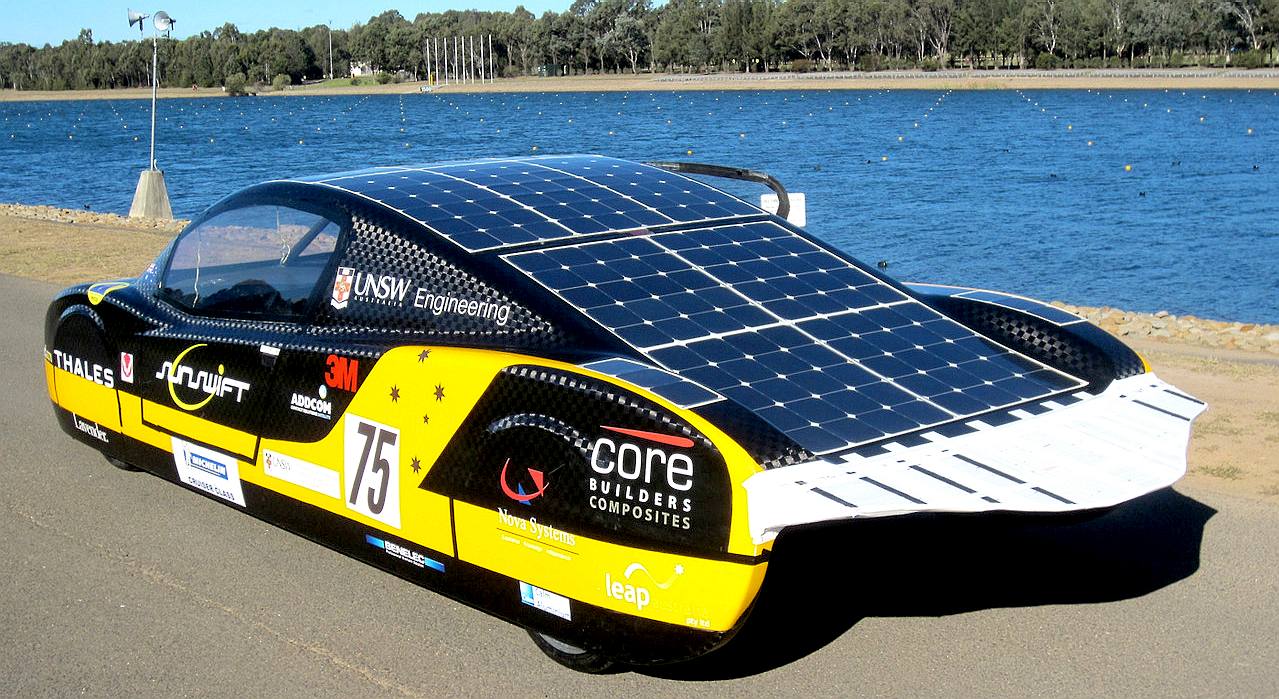
Modern sEVs utilize high-efficiency, flexible, and durable solar panels, often made from monocrystalline silicon or cutting-edge materials like gallium arsenide. These panels are seamlessly integrated into the vehicle’s exterior—on the roof, hood, and sometimes even door panels and rear sections. The key innovation is in their form factor; they are no longer rigid, bolt-on additions but are molded into the car’s curvatures using laminated, shatterproof glass composites, maintaining aerodynamics while maximizing surface area.
A.2. The Energy Conversion and Management System
The electricity generated is direct current (DC). A critical component, the maximum power point tracker (MPPT), constantly optimizes the voltage from the solar array to harvest the maximum possible power under varying light conditions. This energy then flows to a central power controller, which performs a vital triage function:
-
Direct Usage: It can route power directly to the vehicle’s drivetrain to propel the car while in motion.
-
Battery Charging: It can divert surplus energy to charge the vehicle’s primary lithium-ion or solid-state battery pack, storing it for later use.
-
Auxiliary Systems: It can power ancillary systems like climate control, infotainment, and lighting, significantly reducing the “vampire drain” on the main battery.
A.3. Synergy with Regenerative Braking
Solar charging works in perfect synergy with regenerative braking, another hallmark of electric vehicles. While regenerative braking recaptures kinetic energy during deceleration, the solar panels harvest ambient light energy. Together, they create a multi-source energy recovery system that continuously extends the vehicle’s range, making it exceptionally efficient.
B. Current Trailblazers: Solar-Assisted Cars on the Market Today
While a fully sun-dependent car for all conditions remains a future goal, several pioneering manufacturers have launched production or near-production vehicles with significant solar capabilities.
B.1. Lightyear 0 (and its successor, Lightyear 2)
The Dutch company Lightyear made global headlines with the Lightyear 0, a luxury sedan boasting 5 square meters of integrated solar cells. Under ideal conditions, its solar roof could add up to 70 km (44 miles) of range per day. Although production was limited, it served as a proof of concept. The upcoming, more affordable Lightyear 2 aims for mass production, promising up to 50 km (31 miles) of daily solar charge, targeting a much broader consumer base.
B.2. Sono Motors Sion
Germany’s Sono Motors took a community-funded approach with the Sion, a compact car blanketed with 456 integrated solar half-cells. Its unique selling point is bi-directional charging via its solar-boosted battery, allowing it to power other EVs or home appliances effectively turning the car into a mobile solar power station. The Sion exemplifies the concept of a vehicle as an energy asset.
B.3. Aptera Motors Paradigm
Aptera stands out with its ultra-efficient, three-wheeled design. Its entire rear surface is covered with solar cells, and due to its incredible aerodynamic efficiency (with a drag coefficient lower than most sports cars), its solar array can provide an astonishing 64 km (40 miles) of free range per day. In sun-rich regions, many owners might rarely need to plug in.
B.4. Hyundai Sonata Hybrid and Toyota Prius Prime
Mainstream automakers are also integrating solar. Hyundai offered a solar roof option on its Sonata Hybrid, claiming it could add 3-5 miles of range daily. Toyota has incorporated solar panels on the roof and hood of the Prius Prime in some markets, primarily to power auxiliary systems and slightly boost EV range. These implementations show the technology trickling into conventional lineups.
C. The Multifaceted Benefits: Why Solar Integration is a Game-Changer

The advantages of solar-powered vehicles extend far beyond the individual owner, promising systemic benefits for energy grids and the planet.
C.1. Dramatic Extension of EV Range and Reduction of “Range Anxiety”
Solar integration acts as a constant, passive range extender. Daily solar gains can cover the average commute, effectively making short trips “infinite range.” For longer journeys, it significantly reduces the frequency of required charging stops, directly tackling the pervasive consumer concern of range anxiety.
C.2. Unparalleled Energy Independence and Grid Relief
sEVs reduce dependency on the public charging infrastructure, which is still under development in many areas. More importantly, by generating their own fuel, they alleviate strain on the electrical grid, especially during peak demand periods. In a future with vehicle-to-grid (V2G) technology, a fleet of parked sEVs could feed clean energy back into the grid, stabilizing it.
C.3. Profound Environmental Impact and Lifecycle Emissions Reduction
While EVs already have zero tailpipe emissions, their “well-to-wheel” carbon footprint depends on how the grid electricity is generated. Solar cars use 100% clean, renewable energy for their added miles. Over the vehicle’s lifetime, this drastically lowers its total carbon emissions and overall environmental impact, moving us closer to true sustainability.
C.4. Substantial Long-Term Cost Savings for Owners
The “fuel” for solar miles is free after the initial investment. Over years of ownership, the savings on electricity or gasoline can be substantial, improving the total cost of ownership. Furthermore, reduced cycling of the main battery through solar trickle-charging may contribute to longer battery life.
D. Navigating the Roadblocks: Challenges and Limitations to Overcome
Despite the promise, significant hurdles must be cleared for sEVs to achieve mainstream adoption.
D.1. Current Limitations of Solar Cell Efficiency and Surface Area
Even the most efficient automotive-grade solar cells today convert only around 20-25% of sunlight into electricity. The relatively small surface area of a car limits total energy harvest. Cloudy days, nighttime, and seasonal variations inherently restrict continuous power generation.
D.2. The Economic Hurdle: Higher Upfront Costs
Integrating specialized, durable solar technology and complex power management systems increases manufacturing costs. This premium, while offset over time, presents a barrier to entry for cost-sensitive consumers, though economies of scale are expected to lower prices.
D.3. Design, Aesthetics, and Durability Compromises
Covering a car with solar panels requires design trade-offs. Manufacturers must balance panel placement with structural integrity, crash safety, and consumer aesthetic preferences. The panels must also withstand years of weather exposure, stone chips, and car washes without degradation.
D.4. The Infrastructure and Regulatory Landscape
The existing automotive ecosystem from dealerships and repair shops to insurance models and government regulations is built around traditional powertrains. Integrating solar requires new training, standards, and possibly updated incentives to encourage adoption.
E. The Highway Ahead: Future Innovations and Long-Term Vision
The trajectory for solar-powered vehicles is exceptionally bright, fueled by relentless innovation across multiple fields.
E.1. Next-Generation Photovoltaic Materials
Research into perovskite solar cells, quantum dot photovoltaics, and multi-junction cells promises dramatic leaps in efficiency, potentially doubling or tripling energy harvest from the same surface area. These materials could also be cheaper and more flexible, allowing for integration into every exterior surface.
E.2. Vehicle-to-Grid (V2G) and Mobile Energy Storage Integration
Future sEVs will be key players in the smart grid. While parked, they can feed surplus solar energy into homes or the grid (V2H/V2G), earning owners money and providing critical grid services. A parked sEV becomes a decentralized power node.
E.3. Synergy with Autonomous Driving and Shared Mobility
Autonomous electric fleets, which need to operate continuously with minimal downtime, are ideal candidates for solar integration. A self-driving taxi that can recharge itself between fares by parking in the sun presents an incredibly efficient business model for future mobility-as-a-service (MaaS).
E.4. Expansion into Heavy Transport and Infrastructure
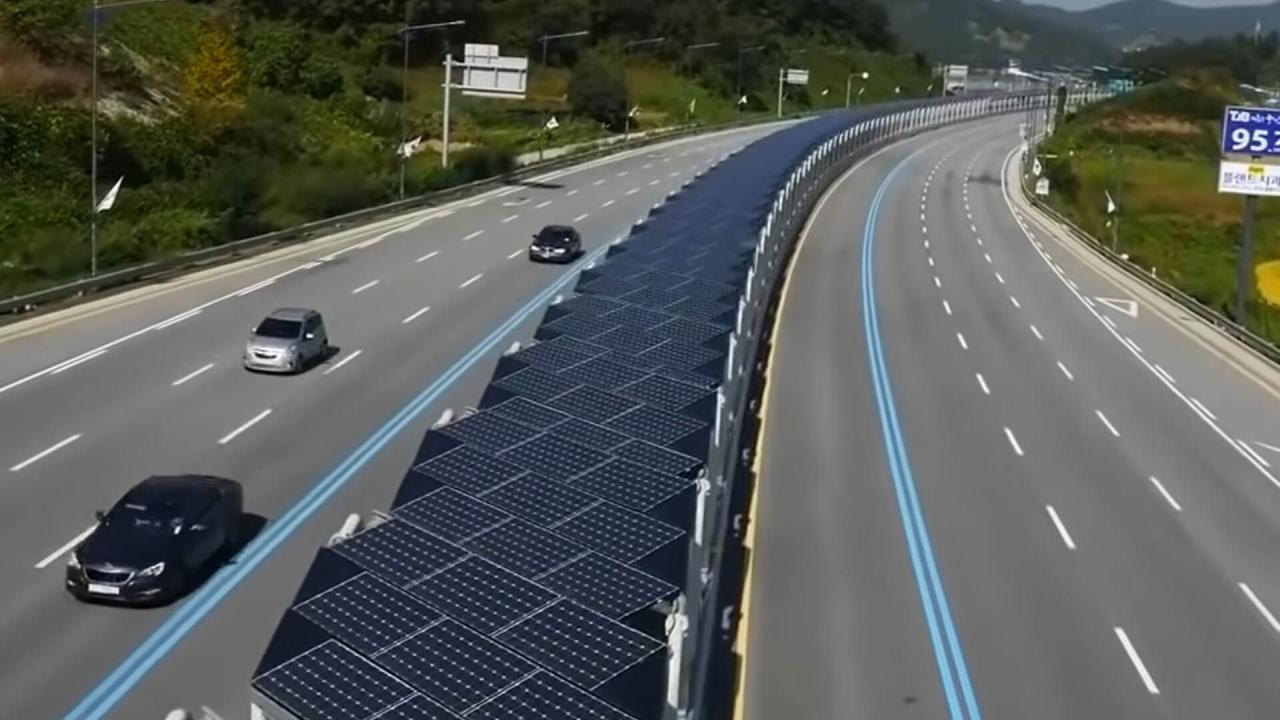
The technology will scale beyond passenger cars. Solar panels on the vast surfaces of electric buses, trucks, and trailers can significantly reduce their operational energy demands. Furthermore, solar-powered highway sound barriers and canopies could create “energy-positive” roads that charge vehicles as they drive.
Conclusion: Driving Towards a Self-Sustaining Future
Solar-powered cars merging onto our highways symbolize far more than a niche automotive trend; they represent a paradigm shift towards self-sustaining transportation. They are not a silver bullet that will completely eliminate the need for plug-in charging, but rather a powerful complementary technology that makes electric vehicles more practical, efficient, and truly green. As technology advances, costs decline, and consumer awareness grows, the hum of cars powered by the sun will become a common soundtrack on highways worldwide. This revolution transcends the automotive industry it is a critical step in decoupling human mobility from finite resources, steering us decisively towards a cleaner, more resilient, and energy-independent future for all. The journey has begun, and the road ahead is illuminated by the most abundant energy source in our solar system.