
The long-anticipated convergence of automotive and aerospace engineering has taken a monumental leap forward. General Motors (GM), a titan of the automotive industry with over a century of ground-based expertise, has officially lifted the veil on its prototype for a flying car. This isn’t a mere concept sketch or a futuristic fantasy; it is a tangible, developed prototype that signals GM’s serious commitment to dominating the nascent Urban Air Mobility (UAM) market. This revelation marks a pivotal moment, not just for GM, but for the entire landscape of personal and public transportation. It challenges our fundamental understanding of commuting, logistics, and urban planning. In this exhaustive analysis, we will dissect every facet of GM’s groundbreaking prototype, exploring its technical specifications, the revolutionary technology powering it, the profound implications for society and infrastructure, the potential roadblocks to mainstream adoption, and how it positions itself against a growing field of competitors. Buckle up, as we prepare for takeoff into a detailed exploration of the future of transit.
A. Unveiling the Prototype: Design Philosophy and Core Specifications
GM’s prototype, emerging from its secretive research and development divisions, embodies a design philosophy that balances aerodynamic efficiency with practical urban utility. While the company remains guarded about every precise metric, informed analysis from the reveal allows us to construct a detailed picture.
A.1. Vehicle Architecture and Form Factor: The prototype is categorized as an electric Vertical Take-Off and Landing (eVTOL) vehicle. It forgoes the need for long runways, utilizing distributed electric propulsion—multiple rotors or ducted fans—to achieve lift. The design likely incorporates a multi-rotor or lift-plus-cruise configuration, where some propellers are dedicated solely to vertical lift, while others transition for forward flight. This approach offers greater stability and safety redundancy compared to single-rotor designs.
A.2. Powertrain and Propulsion: At its heart lies a fully electric powertrain, a direct extension of GM’s massive investments in battery technology through its Ultium platform. This scalable battery system is expected to provide the immense energy density required for sustained flight. The electric motors powering the rotors are prized for their reliability, low maintenance, near-silent operation compared to combustion engines, and instant torque delivery.
A.3. Cabin and Passenger Experience: Early indications suggest a cockpit designed for autonomy-first, with provisions for manual override. The cabin is projected to accommodate between two to four occupants, prioritizing comfort and panoramic visibility to alleviate any sense of claustrophobia. Materials will emphasize lightweight composites without sacrificing a premium feel, integrating the connectivity and infotainment suites synonymous with modern luxury vehicles.
A.4. Key Performance Indicators (KPIs): Although subject to change, industry benchmarks and GM’s engineering goals point to targeted capabilities. These include a range of approximately 100-150 miles on a single charge, a cruise speed of 80-110 mph, and vertical take-off/landing capabilities requiring only a clearing roughly the size of two parking spaces. Noise output is a critical design parameter, aiming for levels significantly below traditional helicopters to ensure community acceptance.
B. The Technological Vanguard: Deconstructing the Core Systems
The magic of this flying car prototype isn’t in any single part, but in the seamless, complex integration of multiple cutting-edge systems. Understanding these technologies is key to appreciating the engineering marvel.
B.1. Advanced Battery and Energy Management: The Ultium battery is more than just a power source; it’s an intelligent energy ecosystem. Its pouch-style cells allow for flexible stacking to optimize space within the airframe. An advanced thermal management system is crucial for maintaining optimal battery temperature during high-discharge phases like takeoff and in varying weather conditions. Regenerative braking during descent could be employed to recapture minor amounts of energy.
B.2. Distributed Electric Propulsion (DEP): This is the cornerstone of modern eVTOL design. By using multiple independent motors and rotors, the vehicle achieves inherent stability and redundancy. If one or even two motors fail, the flight control computer can instantly redistribute power to the remaining units, allowing for a safe controlled landing. DEP also reduces the acoustic signature by allowing for smaller, faster-spinning rotors.
B.3. Flight Control and Autonomous Systems: Arguably the most complex component is the artificial intelligence (AI) pilot. This system integrates data from a suite of sensors: LiDAR for high-resolution 3D mapping, radar for object detection in all weather conditions, optical cameras for visual recognition, and ultrasonic sensors for precise hover and landing. The AI must process this data in real-time to navigate complex, dynamic urban corridors, avoid static and moving obstacles (including other eVTOLs and drones), and manage flight parameters without human intervention.
B.4. Materials Science and Lightweighting: To achieve the necessary strength-to-weight ratio, the airframe leverages advanced materials. Carbon fiber reinforced polymers (CFRP), aluminum alloys, and titanium will be used extensively. Additive manufacturing (3D printing) will likely produce complex, lightweight structural components that are impossible to make with traditional methods, reducing both weight and assembly complexity.
C. The Ecosystem of Flight: Infrastructure, Regulation, and Urban Integration

A flying car cannot exist in a vacuum. Its success is inextricably linked to the ecosystem that supports it. GM’s reveal is a starting pistol, prompting critical discussions about the world it will operate within.
C.1. Vertiports and Charging Infrastructure: The ground network will consist of “vertiports” dedicated takeoff, landing, and charging hubs. These will need to be integrated into existing urban fabric: atop parking garages, at transportation hubs like major airports and train stations, and in suburban centers. High-power wireless or automated conductive charging pads will be essential for rapid turnaround, especially for proposed air taxi services. Planning must include air traffic flow corridors to and from these nodes.
C.2. The Regulatory Labyrinth: Gaining certification is GM’s single greatest hurdle. The vehicle falls under a novel category, requiring collaboration between aviation authorities (like the FAA in the U.S. and EASA in Europe) and automotive safety agencies. A completely new framework for pilot licensing (or the validation of autonomous systems), airworthiness certification, maintenance protocols, and air traffic management for high-density low-altitude operations must be developed. This process will take years of rigorous testing and negotiation.
C.3. Transforming Urban Planning and Society: The societal impact is profound. UAM promises to reduce ground traffic congestion, potentially shrinking commute times from hours to minutes. However, it raises questions about equitable access, noise pollution, visual impact, and airspace security. City planners must begin zoning for vertiports now. Furthermore, public acceptance is not guaranteed; communities will need assurance regarding safety, privacy, and who benefits from this “sky highway.”
C.4. Potential Use Cases and Economic Models: The initial applications will likely be focused:
-
Air Taxi Services: On-demand, point-to-point urban transit, booked via an app.
-
Emergency Medical Services: Rapid transport of patients or organs, bypassing ground obstacles.
-
Logistics and Cargo: Time-sensitive delivery of high-value goods.
-
Private Ownership: For high-net-worth individuals, akin to owning a private helicopter but simpler and quieter.
The business model for mass adoption likely hinges on the “air taxi” service, making the technology accessible without the burden of individual ownership.
D. Navigating Turbulence: Challenges and Hurdles to Overcome
The path from prototype to production is fraught with formidable challenges that GM and the entire industry must address.
D.1. Safety: The Non-Negotiable Priority: This is the paramount concern. The system must achieve a level of safety orders of magnitude greater than automobiles, aspiring to aviation standards. Redundancy must be built into every critical system: propulsion, power, flight controls, and communications. The AI pilot must be impeccably trained to handle extreme edge-case scenarios, such as sudden microbursts, bird strikes, or simultaneous system failures. Public trust will be built on a flawless safety record.
D.2. Cost and Scalability: Current development costs are astronomical. The challenge is to leverage automotive-scale manufacturing techniques to bring down the unit cost. GM’s advantage is its massive supply chain and manufacturing expertise. The goal is to achieve economies of scale that make the vehicles, or the rides within them, affordable for a significant portion of the population, not just the elite.
D.3. Air Traffic Management (ATM) 2.0: Today’s air traffic control cannot handle hundreds or thousands of low-altitude eVTOLs. A new, highly automated system is required. This will likely be a digital, cloud-based management layer that uses 4D trajectories (including time) to deconflict flight paths autonomously, in real-time. It must integrate seamlessly with existing systems managing helicopters, drones, and conventional aircraft.
D.4. Energy Grid and Environmental Impact: While electric propulsion is zero-emission at point of use, the environmental benefit is only as clean as the electricity grid that charges it. Widespread adoption will place new, concentrated demands on urban power grids. Furthermore, the full lifecycle environmental cost from mining rare earth minerals for batteries to manufacturing and eventual recycling must be responsibly managed to ensure a true net positive for the planet.
E. The Competitive Skies: How GM Stacks Up Against Rivals
GM is not entering an empty sky. The competitive landscape is crowded with well-funded players, each with a distinct approach.
E.1. Legacy Automotive Rivals: Companies like Toyota, Hyundai, and Stellantis are investing heavily in eVTOL technology through subsidiaries and partnerships. Hyundai’s Supernal division, for example, is working closely with regulatory bodies and has a clear roadmap to service. GM’s deep automotive manufacturing and consumer market experience is its key differentiator here.
E.2. Aerospace Incumbents and Start-ups: Aerospace giants like Boeing and Airbus have their own eVTOL projects (e.g., Airbus’s CityAirbus). Meanwhile, a host of agile start-ups like Joby Aviation, Archer Aviation, Lilium, and EHang have been testing prototypes for years and, in some cases, are already listed on public markets. Their agility and singular focus are advantages, but they lack GM’s production muscle and balance sheet.
E.3. The Tech Titan: Perhaps the most formidable wildcard is Google co-founder Larry Page’s Kitty Hawk corporation and its related ventures. Backed by immense personal capital and Silicon Valley’s software-first mindset, they represent a fundamentally different philosophy. However, many of these ventures have faced significant technical and regulatory setbacks.
GM’s Strategic Advantage: GM’s unique strength lies in its hybrid identity. It possesses the manufacturing scale, supply chain mastery, and vehicle integration knowledge of an auto giant, combined with the ability to attract top aerospace engineering and software AI talent. Its Ultium battery platform provides a tangible, scalable technological core. Its challenge will be to move with the speed and agility of a start-up while navigating the meticulous, slow-moving world of aviation certification.
Conclusion: More Than a Prototype, A Vision for a Multi-Dimensional Future
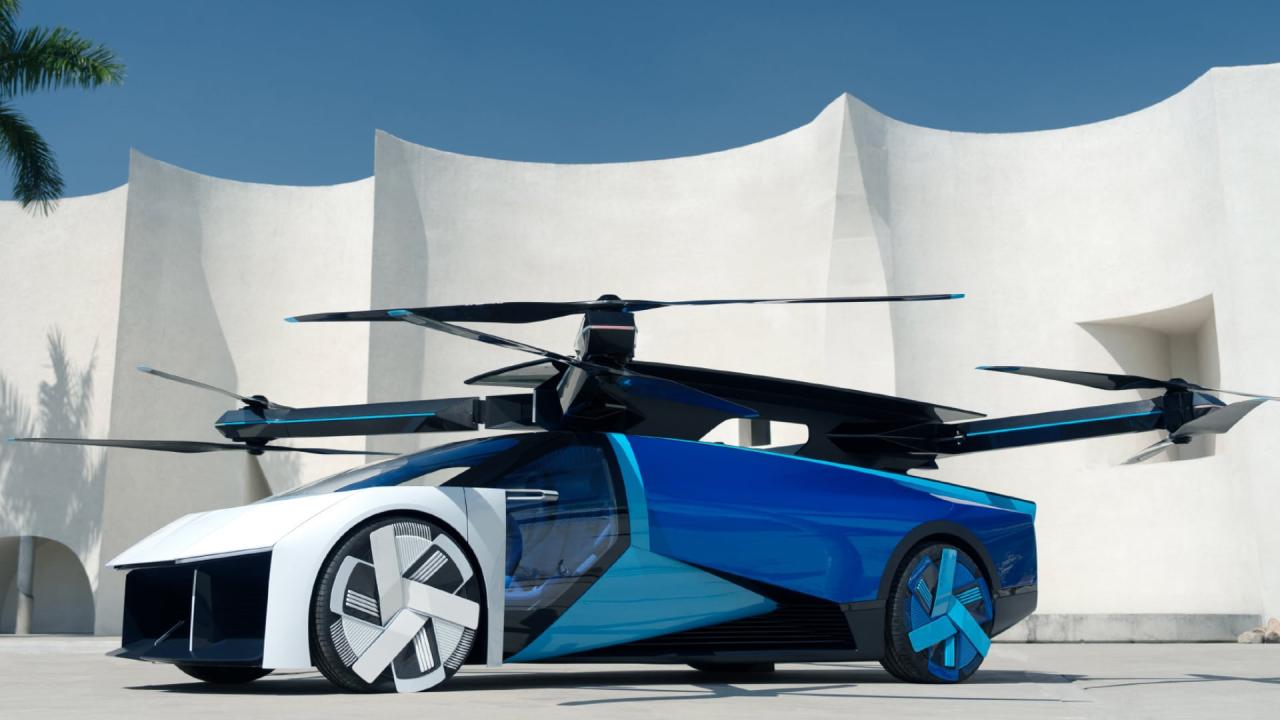
General Motors’ flying car prototype is far more than a novel engineering project; it is a bold declaration of intent for the future of mobility. It represents the first concrete step by a traditional automotive powerhouse to physically claim its stake in the three-dimensional transit space. While the challenges of safety, regulation, infrastructure, and cost are Herculean, the potential rewards reduced congestion, liberated time, new economic opportunities, and a step towards more sustainable urban transit are transformative.
This reveal accelerates the entire industry’s timeline, forcing regulators, city planners, competitors, and the public to engage with the imminent reality of urban air mobility. The journey from this prototype to a certified, commercially viable service will be a marathon, not a sprint, filled with technical iterations, policy debates, and public discourse. Yet, one thing is now clear: the age of the flying car has transitioned from the realm of science fiction into a tangible, though complex, engineering and societal project. The sky, as they say, is no longer the limit it is the next layer of our interconnected world, and GM has just placed a formidable marker upon it.