The automotive landscape is undergoing a seismic shift, a transformation so profound that it redefines our very conception of power, utility, and luxury. For decades, the pickup truck segment was dominated by rugged, combustion-engine behemoths, symbols of raw mechanical prowess. However, the electric revolution, spearheaded by audacious designs like Tesla’s Cybertruck, has shattered this paradigm. In a move that signals both validation and escalation of the electric pickup wars, Mercedes-Benz, the paragon of automotive luxury and engineering, has officially unveiled its vision for the future: a full-electric pickup truck designed to directly challenge the Cybertruck’s dominance. This isn’t merely a new model launch; it is a strategic declaration that the battle for the soul of the future pickup truck is now fully joined, merging uncompromising luxury with formidable capability in an all-electric package.
This comprehensive analysis delves into every facet of Mercedes’ groundbreaking entry. We will explore its design philosophy, dissect its promised performance metrics, analyze its technological suite, and situate it within the burgeoning and fiercely competitive electric pickup market. The unveiling of this vehicle marks a pivotal chapter in automotive history, promising to accelerate adoption, push technological boundaries, and offer consumers a sophisticated alternative to the established players.
A. Deconstructing the Design: Where Brutalism Meets Baroque
Mercedes’ design team faced a formidable challenge: creating an electric pickup that is immediately recognizable as a Mercedes-Benz while embodying the strength required of the segment. The result is a masterful synthesis of muscular presence and aerodynamic efficiency, a stark contrast to the Cybertruck’s radical angularity.
A.1. Exterior Philosophy: Purposeful Sculpture
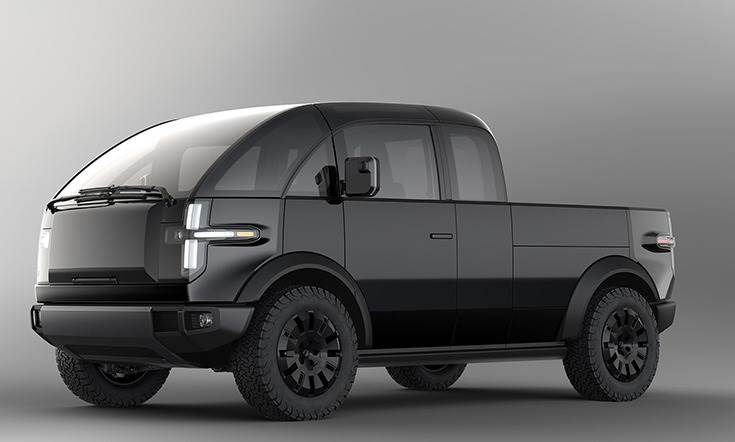
Gone are the sheer, flat planes of the Cybertruck. The Mercedes contender features a more evolutionary yet bold design language. Expect a prominent, illuminated Black Panel grille – a signature EV element for Mercedes – seamlessly integrating sensors for advanced driver-assistance systems. The front end is commanding, with sharp LED or potentially Digital Light headlamps that lend a focused, intelligent gaze. The silhouette retains a pickup’s essential three-box design but is softened by flowing character lines that sweep from the front fenders to the rear, minimizing drag coefficient a critical factor for EV range. The bed, likely crafted from advanced composites or rust-proof alloys, incorporates clever details like integrated LED lighting, a multi-position tailgate (with power operation), and seamless mounting points for a range of accessories. The wheel arches are pronounced, housing massive alloy wheels designed for both street presence and off-road capability.
A.2. Interior Sanctuary: The “S-Class” of Pickups
If the exterior is purpose-built, the interior is where Mercedes asserts its absolute dominance. The cabin is anticipated to be a veritable oasis of luxury, materials, and technology. Imagine the hyperscreen concept a seamless curved glass panel spanning the entire dashboard or a latest-generation MBUX infosystem with pickup-specific features and off-road visualization. Materials will transcend typical truck interiors, featuring sustainably processed nappa leather, open-pore woods, matte-finish metals, and recycled microfiber. Ambient lighting with hundreds of configurable colors will create a lounge-like atmosphere. Crucially, practicality is not sacrificed; expect ingenious storage solutions, durable, easy-to-clean surfaces in key areas, and seating that offers both supreme comfort for five adults and robust support for adventurous journeys.
B. Underpinning Excellence: The Architecture of Ambition
The vehicle will be built on Mercedes’ dedicated electric vehicle platform, likely a heavily modified version of the EVA2 platform used for the EQE and EQS SUVs or a next-generation architecture specifically for larger vehicles.
B.1. Powertrain and Performance Configurations
Mercedes is expected to offer multiple powertrain variants to cater to different market needs:
-
Dual-Motor AWD (Standard): A powerful setup offering ample horsepower and torque for towing and rapid acceleration, positioned as the volume seller.
-
Tri-Motor or Quad-Motor Performance: A flagship variant designed to directly compete with the Cybertruck’s top specifications. This configuration would offer staggering power outputs, torque vectoring across all four wheels for unprecedented agility and off-road prowess, and blistering 0-60 mph times potentially under 3.5 seconds.
-
Range and Battery Technology: Leveraging its extensive R&D, Mercedes will employ high-density NMC or potentially its proprietary silicon-anode chemistry batteries. Targeted range figures will be critical; expect announcements aiming for 350 to 450 miles on a single charge (EPA estimated), alleviating range anxiety for both work and recreation. 800-volt architecture will be standard, enabling ultra-fast charging that can add hundreds of miles in under 20 minutes.
B.2. Towing, Payload, and Capability Metrics
To be taken seriously, the numbers must impress. The Mercedes electric pickup will target best-in-class figures:
-
Towing Capacity: Aiming to exceed 14,000 lbs, competitive with heavy-duty diesel pickups and surpassing the Cybertruck’s announced specs.
-
Payload Capacity: Engineered to handle over 3,000 lbs in the bed.
-
Off-Road Prowess: An advanced air suspension system with multiple inches of adjustable ride height will be standard. Coupled with sophisticated traction control, locking differentials (virtual or mechanical), and dedicated off-road driving modes, it will be capable of tackling severe terrain. Features like “tank turn” or extreme articulation modes, enabled by independent quad-motor control, could be a party trick to rival Cybertruck’s promises.
C. The Technological Vanguard: Software-Defined Utility
This vehicle will be a rolling supercomputer, defining a new standard for connected, intelligent pickups.
C.1. Advanced Driver-Assistance Systems (ADAS)
It will debut the latest iteration of Mercedes’ DRIVE PILOT, offering conditional Level 3 automated driving on highways. For the pickup context, this means reduced driver fatigue on long hauls. Additionally, expect industry-leading safety features, 360-degree camera systems with under-vehicle views, and trailer-assist technology that simplifies hitching and maneuvering with heavy loads.
C.2. Vehicle-to-Everything (V2X) and Power Export
A cornerstone of its utility will be bidirectional charging. The truck will function as a massive mobile power bank (V2L – Vehicle-to-Load), capable of powering tools at a job site, appliances during a camping trip, or even an entire home during a power outage (V2H – Vehicle-to-Home). This practical feature transforms the vehicle from mere transport into a lifeline and productivity hub.
C.3. Digital Ecosystem and Over-the-Air Updates
Ownership will be defined by continuous improvement. Mercedes will employ comprehensive over-the-air (OTA) update capabilities to refine performance, add new features, enhance battery management, and unlock new functionalities long after purchase, ensuring the vehicle evolves and retains value.
D. Market Context and Strategic Rivalry
The Mercedes entry fundamentally alters the electric pickup chessboard. Let’s analyze its position against key competitors:
D.1. Versus Tesla Cybertruck: This is the headline rivalry. The Cybertruck relies on disruptive design, radical stainless-steel exoskeleton construction, and Tesla’s tech-centric brand appeal. Mercedes counters with a more accessible (though still avant-garde) design, unparalleled interior luxury, a century of automotive refinement, and a potentially more robust service and dealership network. The battle will be between disruptive innovation and evolved excellence.
D.2. Versus Rivian R1T: The R1T has established itself as a capable, adventure-focused EV pickup with ingenious features like the gear tunnel. Mercedes will challenge it with a more premium brand cachet, potentially superior on-road dynamics, and a global sales and service footprint that Rivian is still building.
D.3. Versus Ford F-150 Lightning & Chevrolet Silverado EV: These represent the electrification of American icons, carrying immense brand loyalty and built on a philosophy of familiarity. Mercedes does not seek to compete on pure “work truck” ethos alone. Instead, it will occupy a higher-tier, luxury-performance space, appealing to those who want both supreme capability and a badge that signifies prestige, potentially creating a new segment: the “Lifestyle Luxury Electric Pickup.”
E. The Road Ahead: Production, Pricing, and Impact
E.1. Anticipated Timeline and Manufacturing
Mercedes will likely produce this vehicle in its U.S. facilities (potentially in Alabama or alongside its SUV lines) to qualify for federal EV tax incentives and optimize logistics for the crucial North American market. A concept reveal is imminent, with a production model debut expected within the next 18-24 months, and first deliveries following shortly after.
E.2. Projected Pricing and Model Strategy
Pricing will be premium, reflecting its positioning. Expect a starting MSRP in the high $80,000 to low $100,000 range for dual-motor configurations, with performance quad-motor models exceeding $120,000. This places it firmly in the luxury sphere, above the Ford and Chevrolet offerings, and in direct competition with the higher-end Cybertruck and Rivian models.
E.3. Environmental and Industry Impact
Mercedes’ commitment to carbon-neutral production and sustainable supply chains will extend to this vehicle. Its success would prove that sustainability and luxury-performance are not mutually exclusive, accelerating the entire industry’s transition. It legitimizes the electric pickup as a desirable object not just for utility, but for aspiration, pulling traditional luxury sedan and SUV buyers into the segment.
Conclusion: More Than a Truck, A Statement of Intent
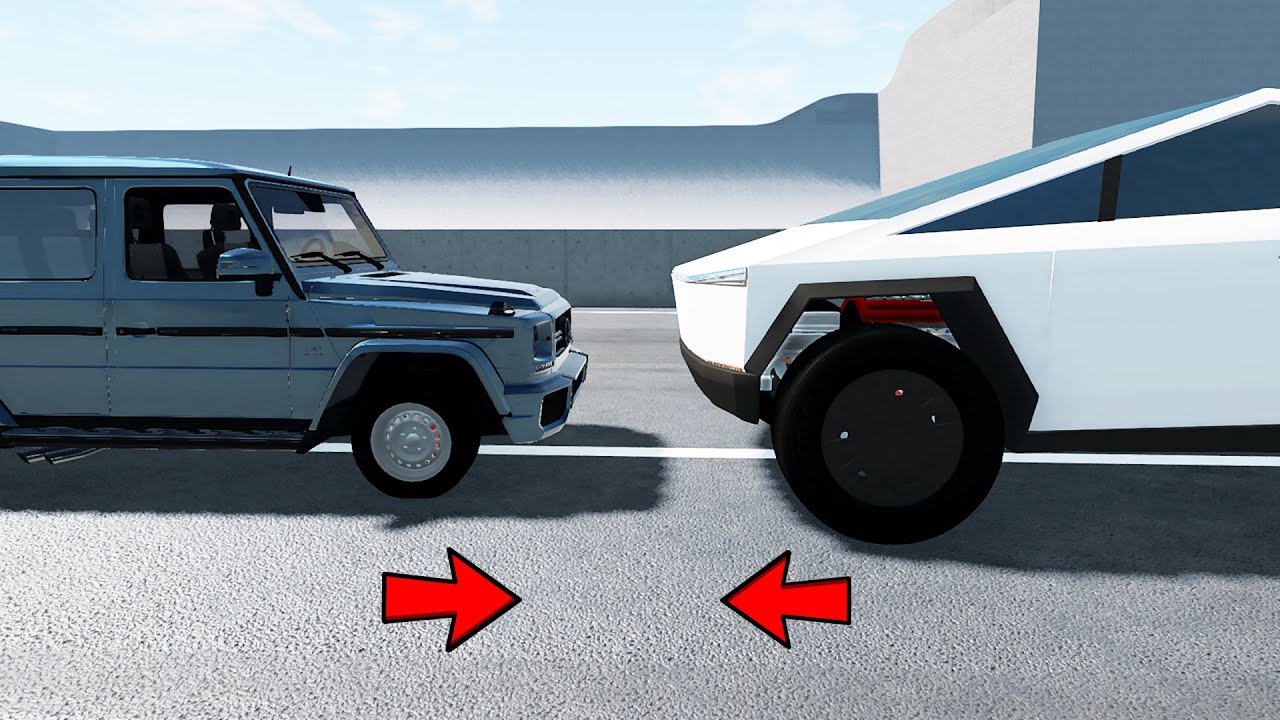
The unveiling of Mercedes-Benz’s electric pickup is a watershed moment. It signifies that the era of electric pickups is not a niche experiment but the definitive future of the segment. By combining its legendary prowess in luxury, safety, and engineering with the silent, instantaneous power of electric propulsion, Mercedes is not just launching a Cybertruck rival; it is crafting a new archetype. It promises a vehicle that can silently glide through city streets as a tech-filled sanctuary, then transform into a rugged, long-range, massively capable workhorse or adventure companion without compromising on comfort or prestige. In doing so, Mercedes elevates the entire electric pickup conversation, setting a formidable benchmark that will compel every competitor, from Tesla to traditional giants, to raise their game. The race for electric pickup supremacy has just gained a formidable, and undeniably luxurious, new contender. The road to an electric future is paved with innovation, and with this move, Mercedes has decisively shifted into the fast lane.